
In line with GA!’s aspiration to connect current events with history, you can find this week’s headlines below, provided with additional commentary from a historical perspective.
“Who are the rebels seizing control of Syria’s second city?”
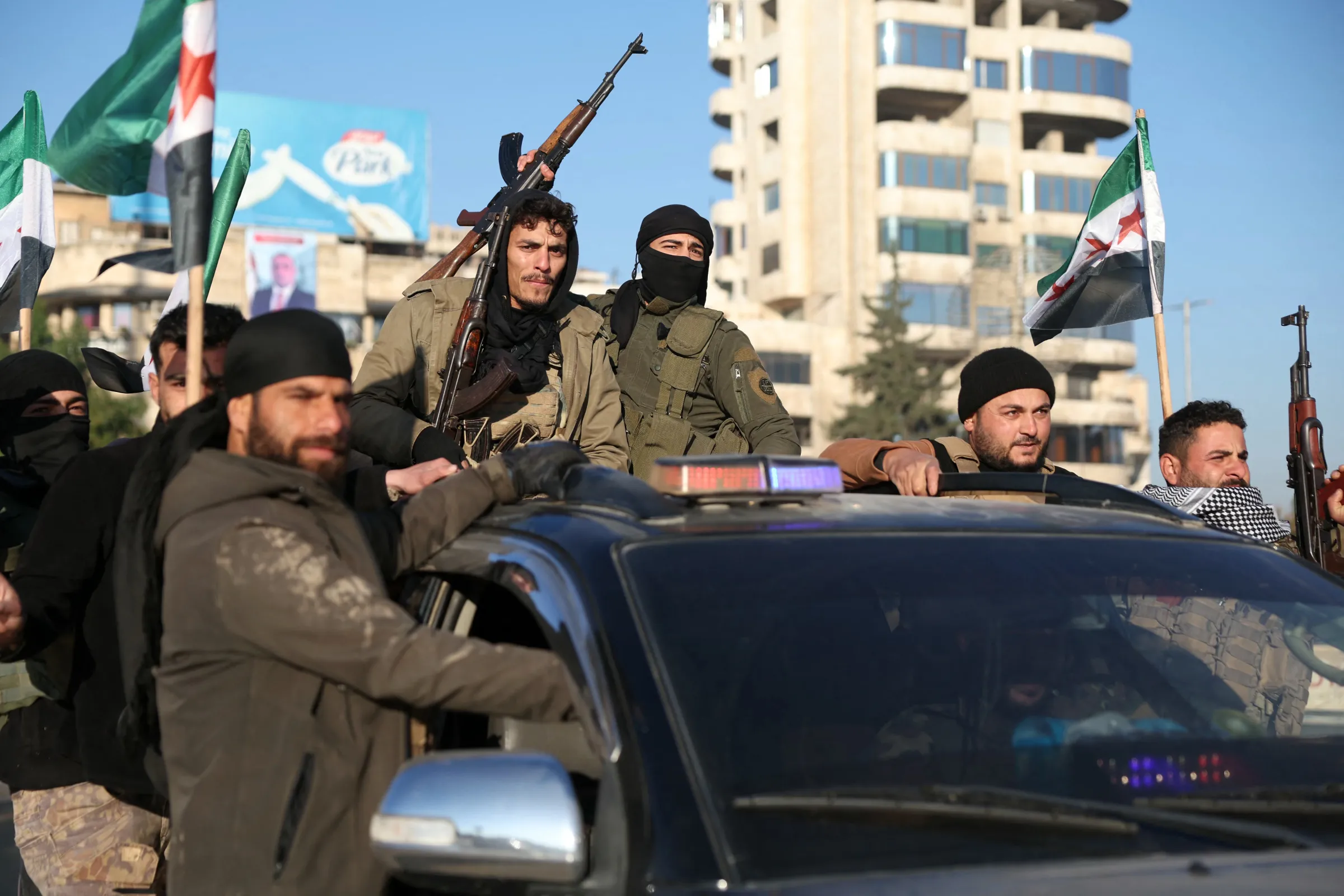
The Syrian Civil War has restarted this week after a few years of relative quiet between all fighting parties. The civil war has restarted after an offensive by the Islamist militant group Hayat Tahrir al-Sham (HTS) captured Aleppo, Syria’s second largest city. The situation in Syria is very complex and has a long history.
Syria has been part of, among others, the Roman, Persian, Byzantine and Ottoman Empires and has one of the most ancient histories on the globe. In 1919 it became a French protectorate after the Ottoman Empire collapsed after World War I. It gained independence in 1946 after which a messy era of many coups by military leaders followed. During this time Syria was involved in the Arab wars against Israel. During the Six Day War in 1967, it lost the strategic Golan Heights to Israel. In 1970 Hafez al-Assad gained power after a few years of Ba’athist rule had preceded him. He would rule Syria until his death in 2000, after which his son Bashar al-Assad took over the reigns.
In 2011, the Arab Spring provided inspiration for the Syrian people to protest against the tyrannical rule of Assad and demand democratic reforms too. The protests spiralled into a civil war. Assad fought back against rebel groups trying to overthrow him with chemical weapons which were condemned by the whole of the international community. The conflict gained a new dimension when through the chaos of the civil war, ISIS was able to establish their caliphate in large parts of Syria. The terror group was subsequently defeated by Western aerial bombardments and an offensive by the Kurdish Syrian Democratic Forces supported by small numbers of American special forces. Turkish forces also invaded Syria to establish a bufferzone on their border. Turkish president Erdogan continues to fear that Kurdish forces in Syria may ally with Kurdish forces in Turkey. President Assad has also been a long time ally of Russia and of Iran because of their common Shia religion. Russian planes have bombarded rebel groups fighting against the Syrian government and the infamous Wagner Group has been involved in fighting on the ground.
Around 2020 a fragile but relatively stable situation had formed whereby the Kurdisch SDF reigned the north eastern part of Syria, government forces of Assad reigned over a majority of the country while small cells and pockets of ISIS fighters remained in the central desert and small militias supported by Turkey operated in the north close to the Turkish border. Assad was welcomed back into the Arab League after he had been banished following his chemical attacks.
This relative truce has now thus been broken by the HTS militia, who are indirectly supported by Turkey. The group was founded as Jabhat al-Nusra and had strong jihadist ties with Al Qaeda. This Jihadi ideology seems to have gotten somewhat less extreme over the past years but the group still fights for the implementation of Sharia rule in Syria.
This new offensive has now led to a situation where a militia supported by Turkey is fighting the Assad government which is supported by Iran and Russia. This is remarkable because of Erdogan’s cordial relation with both Putin and Iran. Turkey is also a NATO ally of course but supports a group which also competes with the Kurdish SDF, which is supported by most Western countries. Iran has now sent some of the Shia militias which it supports in Iraq over the border into Syria to fight alongside Assad. The reason for this offensive is likely the weakened position of Assad because of Israeli bombardments throughout Syria during the past year since the war in Gaza started and a weakened Hezbollah. This adds another peculiar dimension since Netanyahu and Putin also have a relatively good relationship, but one is fighting the ally of the other.
Foreign interventions have not succeeded in recent history. Both the toppling of Saddam Hussein in neighbouring Iraq and the toppling of Moamar Gadhaffi in Libya plunged those countries into chaos. Both of those interventions were orchestrated by Western powers. It will be interesting to see if Assad were to be toppled by a non-Western power such as HTS, if they could succeed. However, apart from China, all major geopolitical players are active in Syria and no party will easily gain control of all of Syria’s territory. Any hope for a peaceful Syria thus seems to be far away.
“Before exiting, Biden heads to Africa to highlight his own counter to China. Will Trump take it up?”
President Joe Biden, in his final months in office, has made a consequential trip to Angola. This is the first visit of an African nation by a sitting US President since Barack Obama visited the continent in 2015. Biden will visit the Lobito Corridor, a US and EU funded infrastructure project, reminiscent of some of the infamous Chinese Belt and Road Initiative which has funded infrastructure projects all over Africa for the past decade as well.
The Lobito Corridor consists of a 1300 kilometer railway line which will be upgraded and expanded. The railway will be used to transport cobalt from the mines where it is dug up in Congo and Zambia to the port of Lobito in Angola on Africa’s Western shore. The US is investing some 2.5 billion dollars into the project. Cobalt is a key material in the production of many technologies used for the shift towards sustainable energy such as the batteries for electric cars. The Lobito project reminds one of China’s large investments in Africa over the past decade under the Belt and Road Initiative. Interestingly, China is funding a railway line from the same mines in the opposite direction to ports on the eastern shore of Africa.
The project has raised accusations of neocolonialism, as has been the case for many of the Chinese BRI projects. Angola was ruled as a colony by the Portuguese for nearly 400 years. The main commodity the Portuguese extracted from Angola were its people. The local population was traded as slaves on a large scale and brought to another Portuguese colony on the other side of the Atlantic, namely Brazil. Portugal tried incorporating Angola as part of its territory in 1951. This sparked the first violent movement in the early 1960’s against Portuguese rule. After a leftwing coup in Lisbon got rid of the fascist government in 1974, all of Portugal’s colonies were granted independence. In Angola this sparked a civil war as the groups which had fought for independence now started fighting each other. The Civil War became one of the Cold War’s many proxy conflicts as the global powers in the form of the US and the Soviet Union got involved, as well as regional powers such as the South African apartheid regime, Zaire, and the Cubans.
While this project is supposed to increase the US position in Africa, many wonder whether the US will actually be able to follow through. The fact that it has been nearly a decade since a US President last visited the continent has raised questions over the attention Washington actually has for Africa. In contrast, the Chinese have held conferences for African leaders every three years over the past twenty years, while the Americans only managed to organise two of these conferences in the past twenty years.
The African continent is extremely rich in resources and has been the site of colonial conquest over these resources throughout history. Now it seems, the modern day superpowers still wield their influence on the continent. Whether this will bring new conflict or genuine development of infrastructure and the improvement of the life of the average African, will have to be seen.
“Georgian opposition leader arrested after fourth night of protests”
Unrest continues in Georgia after potentially fraudulent election results last month. The Georgian President and opposition claim those elections were rigged. They were won by the Georgian Dream party, who wish to change Georgia’s course from a pro-Western one back to a pro-Russian one. Several days of protests have taken place after Georgian Dream announced it would suspend Georgia’s negotiations with the EU to enter the bloc. Georgia seemed to be on course for entering the EU and potentially NATO in the coming years after having been part of the Russian Empire and Soviet Union for most of its history. Russia has previously tried to get Georgia back into its sphere of influence with the invasions of the Georgian provinces of South-Ossetia and Abkhazia in 2008. Georgian President Zourabichvili has said she will not leave office because she is the only remaining legitimate form of authority left in the country. Georgian Dream seems to have given little message to this as it is now so clearly trying to steer Georgia back into the orbit of Russia. The party itself claims they are just acting to ‘defend Georgia’s sovereignty from outside interference.’ We wrote about the history of Georgia last month and have since also written on the ongoing struggles in other former Soviet and former Warsaw pact countries. As the war in Ukraine heats up, the shadowy struggle for other states surrounding Russia to decide their own future, does so too.
“Romanian leftists ahead of resurgent far right in election”
Another state formerly under the influence of the Soviet Union is Romania. Last week, in a big surprise, an extreme right-wing independent candidate won the first round of the presidential elections. Calin Georgescu has pleaded for Romania to leave both the EU and NATO. Now it seems though that the local Social Democrats have won the parliamentary elections. Romania has had a history of being torn between larger powers. Austria-Hungary, Russia and the Ottoman Empire contested its modern day territories until 1862, when Romania became an independent state. It fought alongside the allies in WWI, gaining a lot of territory afterwards. Its king was deposed on the eve of WWII during which it then joined the Axis powers to take back some of its Moldovan territories. After the war, the Red Army was allowed to stay in Romania where elections were subsequently won fraudulently by the communists after which it joined the Warsaw Pact. From 1965 onwards, the country was led by brutal dictator Nicolae Ceaușescu. After he was deposed in 1989, the country shifted towards modern democracy gradually. It joined NATO in 2004 and the EU in 2007. Romania, one of the EU and NATO states bordering Ukraine and also Moldova, is a key strategic ally of these blocs. A government who would steer the country back towards Russia then would be a strategic blow for both NATO and the EU. There is some evidence of fraud in these recent presidential elections and Romanian courts are currently debating whether or not to rerun the elections. The fight for the future of these former Soviet and Warsaw Pact states then is increasing as seen by the political turmoil in Georgia, Moldova and now Romania.
“Why would we wait?’: Lebanon starts to rebuild as ceasefire takes effect”
Many of Southern Lebanon’s displaced people have started returning to their homes and their businesses after last week’s ceasefire went into effect, ending hostilities in Lebanon for the time being, after two months of fighting. The ceasefire is supposed to finally bring United Nations Security Council Resolution 1701 into existence. This means that both the Israeli Army and Hezbollah have for now withdrawn. The IDF south of the ‘Blue Line’ and Hezbollah north of the Litani River respectively. In addition to the resolution which was supposed to be put in place after the 2006 Lebanon War, the Lebanese National Army will provide ten thousand troops alongside UNIFIL to maintain this truce. We wrote about UNIFIL and the history of conflicts between Israel and Hezbollah in Lebanon in a previous article. Another new element in this ceasefire is the fact that the IDF has the right to intervene if it sees Hezbollah activity south of the Litani River. This clause to many then is an indication that the violence in Lebanon is anything but over. However, because of the fighting fatigue of the IDF and its supplies running low, Netanyahu has been forced to reshift efforts back to Israel’s main struggle in Gaza where violence has certainly not ceased.
“BBC hears of horror and hunger in Sudan massacre town”
While the crisis in the Middle East, the war in Ukraine and mounting tensions around Taiwan have dominated the news cycles for the past few years regarding international politics, the extraordinary human suffering as a result of the Sudanese civil war, has gone largely under the radar. The UN and other experts estimate the scale of some of the committed atrocities and the amount of refugees this violence has produced, is far larger than the already brutal violence which has been on display for the world in Ukraine and Gaza. The civil war started in April 2023 and is being fought between two groups who were governing the country after long time dictator Omar al-Bashir gave up his power in 2019 after large scale protests. The country was a British colony until 1956 and has endured a lot of violence since. In 2003, jihadist groups fought the government in the Darfur region. The UN has since defined the ethnic violence there as genocide. In 2011, the south of the country declared independence as South Sudan after a violent struggle too. In the current civil war, many regional players such as the UAE, Libya and Egypt play significant roles and the international community has not been able to stop the violence. In the media too then, the conflict is largely neglected despite its enormous suffering.



Leave a Reply