
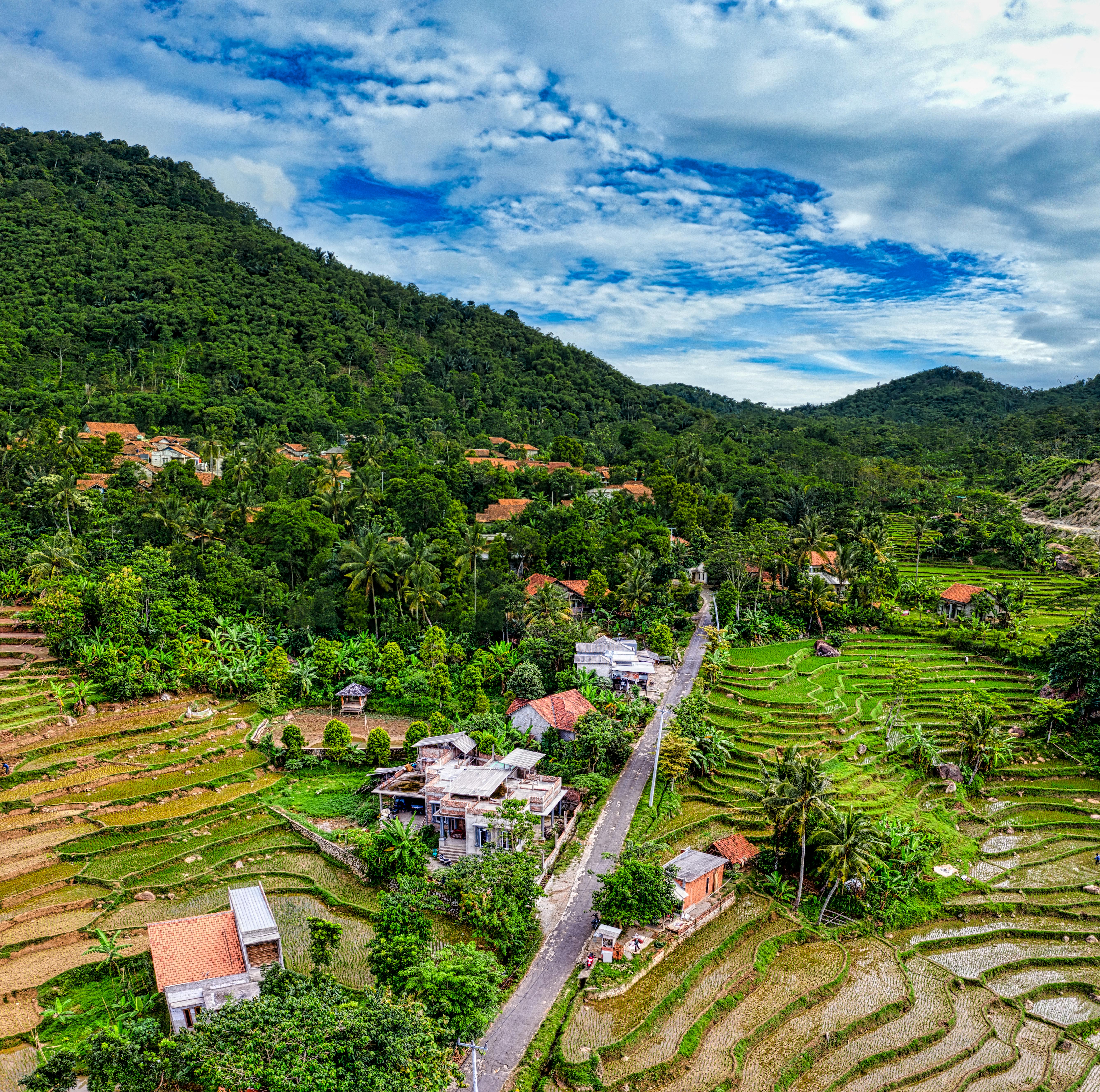
The Spirit of Bandung
Indonesia’s middle power role in southeast asia today

“Freedom and peace are interdependent. The right of self-determination must be enjoyed by all peoples, and freedom and independence must be granted, with the least possible delay, to those who are still dependent peoples. Indeed, all nations should have the right freely to choose their own political and economic systems and their own way of life, in conformity with the purposes and principles of the Charter of the United Nations.”
This passage from the Final Communiqué of the 1955 Bandung Conference captures the foundations of Indonesia’s international identity. That year, Indonesia brought together twenty-nine Asian and African countries that were determined to break free from colonial structures and to speak with a collective voice in world affairs. The Spirit of Bandung is built on solidarity, anti-colonialism and South-South cooperation, which later guided the Non-Aligned Movement and became a touchstone for states seeking strategic autonomy.
Jakarta developed a diplomatic style centred on autonomy, coalition building and careful balancing. Since the Cold War, Indonesia has relied on these principles to navigate its position between major powers. After the end of the Cold War, Indonesia gradually took on a balancing role between China and the United States. This role developed during the unipolar moment of the 1990s, when strategic competition between the major powers had not yet fully emerged. In the last decade, Indonesia has presented itself as a bridge builder in the Indo-Pacific. It acts as a swing state between China and the United States through regional institution-building, trade and investment partnerships and the use of soft power. Therefore, the spirit of Bandung continues to shape Indonesia’s efforts to secure regional stability, expand its economy and maintain independence in global affairs.
At the same time, Indonesia itself is undergoing political change. With President Prabowo Subianto now in power, the country’s foreign policy is entering a new phase that interacts directly with rising geopolitical affairs and tensions. His early decisions raise questions about how Indonesia’s traditional Bandung-inspired principles are being reinterpreted in a more contested Indo-Pacific environment. These shifts make it necessary to reassess Indonesia’s strategic posture and to understand how internal developments relate to external pressures.
This article takes a historical analytical approach that places Indonesia’s current foreign policy within longer patterns of continuity. It examines how Indonesia’s middle power identity is being reshaped in a multipolar world and how Prabowo’s early presidency aligns with or diverges from these trajectories. The central question is how Indonesia is redefining its middle power role today, and to what extent Prabowo’s first year reflects continuity or change in the Bandung tradition. The article addresses this through three steps: a country profile, an analysis of Indonesia’s geopolitical goals and strategies, and an assessment of the shifting political winds under Prabowo.
Country Profile
Indonesia is often described as a middle power. It is not as strong as the major powers, but it is far from weak. In most global rankings, it sits in the middle, and its diplomatic behaviour reflects that position. Indonesia focuses on cooperation and building coalitions rather than confrontation. It also sees itself as a middle power, and most other countries treat it that way.
The country helped launch the Bandung movement in 1955. A decade later, it became a founding member of ASEAN. This regional organisation was created to promote peace, stability and economic cooperation across Southeast Asia. Its growth has been shaped by Indonesia’s ‘bebas dan aktif’ or ‘free and active’ foreign policy and by Jakarta’s leadership in regional diplomacy and the wider Indo-Pacific. For Indonesia, resilience both at home and in the region is inseparable. Suharto, the country’s second president, made this point in the early 1970s. He wanted Southeast Asia to be strong enough to manage its own future without outside interference. His vision was straightforward. A resilient region would bring prosperity at home, stability abroad and contribute to global peace.
Indonesia stands out as the largest country in Southeast Asia, both in terms of population, economy, and geography. It accounts for about 41% of ASEAN’s population and 40% of its GDP. Even though the ASEAN chair rotates each year, Indonesia is widely regarded as the bloc’s natural leader. Yet the geopolitical environment is shifting. Rivalry between China and the United States, the rise of other middle powers, and the growing role of regional institutions all shape the landscape. In this context, Joko Widodo’s administration (2014–2024) sought to revive and reinterpret the Bandung legacy as a guide for foreign policy.
Indonesia’s strength as a regional player rests on its geography, population, and resources. At the crossroads of the Indo-Pacific, it controls vital sea lanes such as the Malacca, Sunda, and Lombok Straits. This strategic role was reinforced in 2017 with the Indonesian Ocean Policy, which asserted full sovereignty over its maritime domain and set out a framework for managing ocean affairs. With more than 270 million people, Indonesia is the world’s fourth most populous country, and its youthful workforce drives economic potential. Natural resources add another layer of power. Vast reserves of nickel and copper make Indonesia a key supplier for global industries, especially in the energy transition and battery production. The Indonesian Geological Agency has also identified rare earth elements, including monazite, xenotime, and bastnaesite, across Kalimantan, Sulawesi, and Bangka Belitung. These finds give the country valuable leverage in the global race for rare earth minerals exploitation. At the same time, they place the country at the centre of geopolitical competition and expose it to pressing environmental challenges.
Indonesia faces a range of domestic challenges that can influence its regional role. The events of 2025, including large-scale demonstrations and public frustration over economic and governance issues, have placed pressure on national institutions. Centre-periphery dynamics also remain sensitive. In Papua, tensions between security forces and local groups continue to affect communities. At the other end of the archipelago, in Aceh, periodic debates over autonomy show that the legacy of past conflict still matters. Other regions, such as Maluku and Central Sulawesi, experience occasional unrest. These events reflect the complexity of governing a diverse archipelago. Environmental pressures, including floods, landslides and earthquakes, place further demands on the government’s ability to coordinate responses across provinces. Taken together, these dynamics show how domestic challenges may influence Indonesia’s governance capacity and its ability to project power abroad.
(Geo)Political Goals
Indonesia’s foreign policy since the early 2000s has been dominated by three main objectives: maintaining regional stability, expanding the economy, and defending its own independence. These are not new priorities. They are reminiscent of the 1955 Spirit of Bandung, which advocated for solidarity, nonalignment, and collaboration among developing countries. Through multilateralism via the use of collective platforms, Indonesia has continued that spirit since the 1950s. This has allowed the nation to demonstrate its independence and contribute to the stability of Southeast Asia.
Regional stability via diplomatic means
Indonesia has long stepped in when Southeast Asia has been shaken by trouble. Jakarta prefers mediation over confrontation, and over the years, has built a reputation for leadership. This reputation is rooted in its role as a founding member of ASEAN in 1967 and reinforced by repeated interventions in crises ranging from the Cambodia–Vietnam war in the 1980s to Myanmar’s turmoil today. Shuttle diplomacy is often its chosen tool. It is a method of quiet, separate talks followed by careful attempts to bring opposing parties together under ASEAN’s umbrella. While it is slow and sometimes frustrating, it has often kept the region from sliding into chaos.
Since 1990, Indonesia has hosted formal and informal meetings to manage tensions in the South China Sea. They opened space for ASEAN members and China to talk. Out of this process came the 2002 Declaration on the Conduct of Parties. Imperfect in design, yet strong enough to keep disputes contained for much of the following decades. It is a fragile balance, but one that has held until today. Fast forward to April 2021, when Myanmar’s crisis was spiralling, and violence was spreading. Indonesia stepped forward, pressing for a special ASEAN leaders’ meeting under Brunei’s chairmanship. The summit produced a five-point consensus aimed at ending the bloodshed and starting the dialogue.
Jakarta also relies on military diplomacy. Every two years, it hosts the Multilateral Naval Exercise Komodo. These exercises are joined by ASEAN members, China, the United States, and other naval powers. They are not combat drills; instead, they focus on humanitarian missions and search-and-rescue practices. It signals Indonesia’s ability to convene, to lead, and to keep waters calmer than they might otherwise be. Alongside this come maritime security dialogues in the ASEAN Defence Ministers’ Meeting Plus and the ASEAN Regional Forum.
Economic Growth
Indonesia is working hard to turn its geography into an advantage by presenting itself as the pivot point of the Indo-Pacific. The country is positioning itself as a logistical hub. It does so by locking itself more firmly into global supply chains via trade deals, new infrastructure, and controlling busy maritime corridors.
During its ASEAN Chairmanship in 2023, Indonesia outlined three key priorities: to revive regional growth and competitiveness, accelerate the digital economy, and promote sustainable growth that can withstand future shocks. A set of sixteen priority deliverables was identified, alongside hundreds of smaller action lines. Some stand out, such as tackling inflation and keeping financial systems stable. Additionally, Indonesia is also keen to strengthen and expand the Chiang Mai Initiative. This is a currency swap arrangement that created a shared pool of foreign exchange reserves, which participating central banks can access when needed. On the practical side, Indonesia started to push for progress on payment systems via QR codes and local currency transactions to reduce reliance on the dollar. Building on its G20 work, Indonesia is also pushing transition finance for the green economy, digital finance integration across ASEAN banks, and better financial literacy to make digital services more inclusive. Trade agreements are part of the mix too; in 2023 Indonesia worked on establishing the ASEAN-Australia-New Zealand Free Trade Area and on advancing talks with China and India.
President Prabowo has added his own economic agenda. Unlike past leaders who were satisfied with modest growth and programmes, he has promised something bolder: an 8 percent growth rate by his fourth year in office, alongside massive welfare projects. These include free nutritious meals for eighty million students each year and the construction of three million houses annually for low-income families. Another major initiative is the creation of Danantara, a state investment authority launched in 2025. It pools sovereign capital, state-owned enterprise assets, and private co-investment, giving the presidency direct control over strategic projects. The appointment of Prabowo’s close ally to lead the state-owned enterprise regulator blurred the line between oversight and execution. In practice, this arrangement extends presidential influence deep into corporate governance and shifts coordination toward command. Nevertheless, challenges remain, and growth is still below target.
Another big and promising move lies in Indonesia’s new policies on rare earth elements, which can be seen as a chance to stake a claim on the global stage. Recently, Jakarta created a state mining agency and worked on drafting new strategic frameworks. At the moment, the country is starting to exploit its recently discovered deposits of monazite, xenotime, and bastnaesite scattered across Kalimantan, Sulawesi, and Bangka Belitung. Alongside nickel, bauxite, and copper, these resources are meant to strengthen Indonesia’s role in the clean-energy supply chain. It gives them leverage to offer the world something beyond China’s dominance. If the plan succeeds, it could mark a genuine turning point. It may be the moment when Indonesia shifts from a regional player to a global shaper of geopolitics. The ambition is clear and the stakes are enormous, yet progress remains slow, held back by technological limitations. Furthermore, these developments also introduce significant risks. The environmental consequences are particularly severe. Collateral damage from rare earth mining can poison rivers and devastate entire landscapes. If left unchecked, the destruction could be both devastating and irreversible, a heavy price to pay for ambition.
Strategic autonomy, the third way
Indonesia’s foreign policy continued to be shaped by the spirit of Bandung in the past decade. They emphasised strategic autonomy and a refusal to align exclusively with either China or the United States. Next to multilateralism, this independent course is supported by investments in maritime security and defence modernisation. Nevertheless, Indonesia’s military capacity remains modest compared to other regional powers. To strengthen its position, Jakarta has actively pursued bilateral defence cooperation agreements and strategic partnerships that provide access to military hardware and enhance cooperation in the security domain. A recent example is the 2025 upgraded defence pact with Australia, which commits both countries to consult regularly at the leader and ministerial level, facilitate “mutually beneficial security activities”, and consider joint measures if either country’s security is threatened. Similar agreements have been concluded with the UK, Canada, France, India, Türkiye and South Africa, underscoring Indonesia’s multi-directional approach.
ASEAN remains the anchor of Indonesia’s diplomacy. Indonesia and other Southeast Asian states have sought to maintain U.S. strategic commitment to the region while enmeshing China in norms of peaceful dispute resolution through ASEAN mechanisms such as the ASEAN Regional Forum (ARF) and the East Asia Summit (EAS). This preserves ASEAN’s centrality and ensures its relevance in managing the regional distribution of power. At the same time, Indonesia itself has also pursued a careful balancing act between China and the United States. Cooperation with China has deepened through the Belt and Road Initiative, which offers opportunities for infrastructure investment but also risks dependency. However, one can frame this engagement as South-South solidarity rather than subordination. On the other side sits the United States, and they see Indonesia as an important partner in their Indo-Pacific Strategy. At the same time, Jakarta draws on the Bandung principle of autonomy to avoid formal alignment. Prabowo’s visits to both Beijing and Washington and his public insistence that Indonesia is “keen to befriend all countries” reinforce this refusal to be reduced to a pawn in great-power rivalry.
Indonesia’s approach is best described as partial multi-alignment. It engages economically with China, enhances security partnerships with the United States and other regional powers, and upholds ASEAN centrality, all without becoming dependent on a single power. Through dual-track engagement with Chinese infrastructure investment and Western partnerships, Indonesia’s strategy has found success in economic diplomacy, particularly in attracting capital and building connectivity. However, its application in the maritime domain remains underdeveloped, leaving a gap between ambition and implementation.
Finally, Indonesia’s pursuit of strategic autonomy is reinforced by a gradual military and naval buildup. The country also plans to double defence spending by 2029. Jakarta has prioritised modernisation and diversification, although defence spending remains modest at just 0.77 percent of GDP. This buildup extends beyond foreign procurement. Jakarta is investing in its domestic defence industry, producing patrol aircraft, and pursuing greater self-reliance through technological developments and industrial reforms. Yet modernisation remains uneven. Much of the fleet is ageing, and limited budgets continue to restrict Indonesia’s ability to project power.
A changing geopolitical wind and Prabowo’s first year
Indonesia’s foreign policy has always carried a certain rhythm. For decades, leaders spoke of bebas dan aktif, balancing carefully between rival powers while holding onto principle. Bandung’s ideals gave Indonesia a moral compass and a sense of purpose in the world. However, that compass feels less steady under Prabowo, and his first year has been marked not by principle but by transaction.
Prabowo wasted no time stepping onto the global stage. His first trip abroad was to Beijing, where he signed ten billion dollars’ worth of deals with Xi Jinping. More striking than the money was the joint statement on the South China Sea. By hinting at recognition of China’s nine-dash line, Jakarta broke with ASEAN’s usual caution. Months later, Prabowo was invited to Beijing’s military parade to commemorate the end of the Second World War as a guest of honour, a gesture heavy with symbolism. Additionally, Prabowo also skipped the G7 Summit in Canada to appear beside Vladimir Putin in St Petersburg at an economic forum.
These moves made clear where Indonesia’s priorities now lie. This is further supported by Indonesia’s request to join BRICS while also applying for Organisation for Economic Co-operation and Development (OECD) membership. This new style can be described as selective alignment. Scholar Virdika Rizky Utama argues this reflects participation without a clear hierarchy of goals, a search for position rather than purpose. Partnerships are now issue-specific: France for defence procurement, China for infrastructure, and the United States for commercial deals. The signal was unmistakable; Indonesia is repositioning itself in a multipolar world.
Scholars and analysts, including Virdika Rizky Utama, note that Indonesia appears to be moving away from its role as a mediating middle power. ASEAN, once Indonesia’s anchor, has slipped into the background. Jakarta attends meetings, but it leads less often than it once did. In crises like Myanmar’s civil war or South China Sea tensions, Indonesia provides presence but not a clear initiative. Neighbours have taken note, and many now hedge rather than wait for Jakarta to set the tone. The region’s quiet expectation that Indonesia would act as a middle power is beginning to fade.
There are benefits to this transactional style because it offers flexibility, visibility and room to manoeuvre. However, it also carries costs. When diplomacy turns into bargaining, trust can weaken, and partners may begin to see Indonesia as available but not always dependable. The decision not to mark the seventieth anniversary of the Bandung Conference with a major event added to the sense that Jakarta has struggled to articulate its voice. Visibility without vision can only go so far. Prabowo’s first year has been bold, restless and highly visible. Yet the question remains about what Jakarta’s goals truly are. Virdika Rizky Utama remarks that Prabowo makes deals and that his appearances can raise a country’s profile, but without a clearer sense of direction they risk leaving only impressions.
All of this unfolds against a wider backdrop. The global liberal world order is fragmenting, and economic power is increasingly securitised. Countries have been raising trade barriers on critical minerals, enacting investment screening in sensitive sectors, and implementing protectionist policies. The changes in the United States, the European Union, and China are reshaping the playing field. For ASEAN and for Indonesia, this means tougher conditions for investment and more pressure to adapt. The ASEAN Economic Community will need to take more initiative, reform its institutions and find ways to shield smaller states from the spillover of great-power rivalry. Yet it remains uncertain how, and to what extent, Indonesia as ASEAN’s primus inter pares will be able to deliver on these expectations.
A middle power in a changing world
Indonesia’s foreign policy still carries the spirit of Bandung. The old idea of independence, South-South solidarity and multilateralism has not disappeared. Yet the liberal world order is weakening, great powers are competing, and smaller states are being pulled in different directions. Indonesia sits in the middle of this shifting landscape. Its geography is a strength, its economy a tool, and its networks a source of influence.
Prabowo’s leadership adds a new tone. Indonesia wants to be more visible on the global stage while also showing that it can protect its own interests. The years ahead will bring difficult choices. The rivalry between the United States and China will continue to test Jakarta’s ability to maintain its independence. ASEAN once offered Indonesia a strong platform, but its cohesion now feels fragile, and rebuilding trust will require sustained effort. At home, ambitious plans for growth and rare earth mining sound promising, yet technological gaps and environmental risks could slow progress. The deeper challenge is credibility. If Indonesia continues to pursue deals without a clear strategic vision, partners may begin to see it as unpredictable. To remain influential, it needs more than visibility and requires a defined purpose to guide its actions.
In the end, Indonesia’s diplomacy is about walking a fine line. The Bandung spirit still resonates, but it now mixes with a sharper and more strategic edge. This blend of pragmatism and ambition will shape Indonesia’s place in the world in the years to come. For Dutch and European policymakers it is essential to recognise this shift because Indonesia’s choices might increasingly be shaped by selective alignment and a strong desire for autonomy. Effective cooperation will therefore depend on steady bilateral engagement and a clear understanding of shared interests. This transition also opens avenues for further research, including how middle powers adapt their strategies in a multipolar order and how domestic political change shapes their ability to balance competing pressures. Understanding how Indonesia navigates this new phase will be essential for anyone seeking to work with or within Southeast Asia’s evolving regional order.
RANDY DE JONG



Leave a Reply