
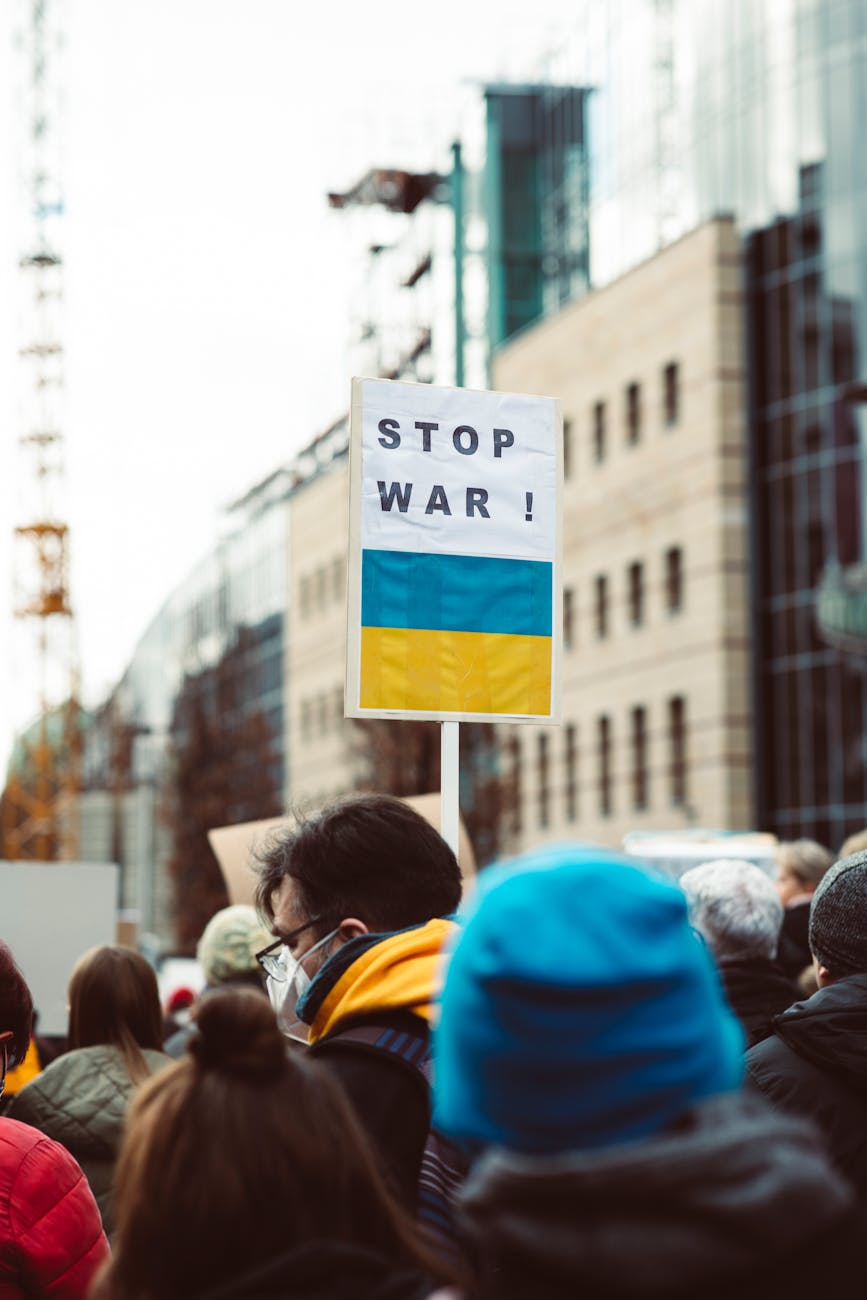
Europe’s Leaders, Dazed by an Ally Acting Like an Adversary, Recalculate
President Donald J. Trump of the United States has announced plans for the United States to negotiate with Russian officials for a peace settlement in Ukraine. However, these negotiations do not involve other European leaders or even Ukraine itself. European leaders met on Monday in Paris in an emergency meeting to discuss the actions of the U.S. and how the continent’s traditional ally has begun undermining the alliance itself.
The decision to exclude European leaders has been part of a pattern of the Trump administration alienating allies and pursuing a purely transactional foreign policy. This was the U.S. policy until the early 20th century, when the nation pursued what is referred to as an isolationist policy, rarely getting involved in foreign wars, with minor exceptions. This policy of non-alignment goes back to the first U.S. President, George Washington, who announced the Proclamation of Neutrality during the War of the First Coalition. Washington, in his farewell speech, would warn against having permanent alliances. Future Presidents would pursue similar policies. James Monroe, the fifth U.S. president, announced the Monroe Doctrine, which said the U.S. would not interfere in the affairs of Europe but warned against European involvement in the Western hemisphere.
This policy lasted for a century, with America slowly becoming more involved in global politics at the turn of the 20th century. After the Second World War, the U.S. would become a global superpower, establishing alliances with Western Europe through the Marshall Plan and NATO. This alliance was built initially to combat the Soviet Union and the spread of Communism. The U.S. saw Western European countries as natural allies due to the shared system of democracy and capitalism and a mutual distrust of the Soviets. After the U.S.S.R. fell, this alliance incorporated most of the former Soviet bloc into NATO and the EU.
However, while Trump may be the most dramatic shift in relations, the rift has slowly increased over the years. In the 1990s, the Americans pushed for more decisive actions against Serbia during the Yugoslav Civil War. Then-Senator, Joe Biden pushed for U.S. troops in Bosnia and said, “Europe can’t stay united without the United States. There is no moral centre in Europe.” When NATO intervened in Kosovo, the decision to bomb Serbia was very controversial within several countries in Europe, especially Germany and Spain. In 2003, when the United States advocated going to war with Iraq to overthrow Saddam Hussein, it was met with French and German opposition, leading to a diplomatic spat between the Americans and the French.
In a 2016 Atlantic piece, U.S. President Barack Obama blamed failures in Libya on European allies, namely the British and French, not committing to rebuilding the country. When he became President, Biden came into conflict with the French because of the formation of AUKUS. The formation of this alliance between the U.S., the United Kingdom, and Australia undermined a French contract to provide Australia with nuclear-powered submarines. Additionally, the Inflation Reduction Act (IRA) under Biden was accused of undermining European industry by European leaders such as French President Emmanuel Macron.
That brings us to Trump. In his first Trump, Trump pushed 25% Steel and 10% Aluminum tariffs on most countries, including European allies. He frequently complained that the European NATO allies did not meet their 2% obligation and threatened not to support them if they are attacked. He also undermined international agreements like the Paris Climate Accords, the Intermediate-Range Nuclear Forces Treaty, and the Joint Comprehensive Plan of Action. Now, Trump is issuing tariffs on more products, threatening a trade war with the EU, and actively undermining European allies diplomatically in negotiations with Russia. The message to Europe and the world should be clear: the U.S. has no friends, only business partners.
Russia and U.S. agree to work toward ending Ukraine war in a remarkable diplomatic shift
President Donald Trump of the United States announced his intention to negotiate with Russia over a peace settlement in Ukraine. The U.S. and Russian negotiations come after nearly three years of war. However, notably, they do not include the country whose soil this war was fought on: Ukraine. The first meeting was between the Secretary of State, Marco Rubio, and the Russian Foreign Minister, Sergei Lavrov, with no Ukrainian officials present.
Both Ukrainian and European officials expressed complaints about being sidelined from the negotiations. Under the previous Biden administration, the U.S. worked closely with both Ukraine and European allies to respond to the Russian invasion. However, now, under Trump, U.S. allies feel left in the dark and that they cannot trust the current administration. When questioned about not inviting Ukraine, Trump responded, “Today I heard, ‘Oh, well, we weren’t invited.’ Well, you’ve been there for three years. You should have ended it three years ago.” This response is telling as it places the blame for the war on Ukraine. Not only is Trump accusing Ukraine of dragging the war on, but of actively starting it.
However, ending the war in Ukraine is not the only goal of these talks. The war in Ukraine over the years has become a politically partisan topic, with many Republicans feeling that aid to Ukraine was a waste of money. Additionally, opinion of Russia has improved among the Political Right in the U.S. Historically, the Republican Party in the U.S., which Trump belongs to, had a far more adversarial stance vis-vis Russia and, previously, the Soviet Union. As late as 2012, former Senator Mitt Romney, then-Republican Presidential candidate, said Russia is America’s greatest foe. This statement was mocked by his opponent, Democratic candidate and incumbent President, Barack Obama.
However, as part of Russia’s propaganda war, the Putin regime has spent years cultivating an image of itself as a right-wing nation built on conservative, Christian values. Russian propaganda portrays a narrative that the Russian state is defending the values of old Europe against “LGBT propaganda,” Islamic terrorism, and uncontrolled migration. Additionally, Russia has actively worked to build relations with and support the far right in Europe, including the National Rally party of Marine Le Pen and the Alternative fur Deutschland in Germany. As part of this strategy, Russia has earned the admiration of many on the American far right, including the most devoted supporters of Trump, who see Russia not as an enemy but as a potential ally.
Additionally, many on the American Political Right see the EU and the U.S.’ traditional partners as being “woke”, overrun with migrants, and authoritarian. Trump’s Vice President JD Vance even spoke of declining European Free Speech. Vance also previously joked about the United Kingdom becoming the first Islamist country with nuclear weapons following the victory of the Labour Party in the British General Election last year. This sentiment, coupled with feelings that European allies are over-reliant on the U.S., has led to many right-wing Americans feeling that the U.S. should pursue a more independent course from Europe.
These talks signal an increasingly closer relationship between the U.S. and Russia. While there were hints of this in the 1990s and early 2000s, these fell due to Russia’s geopolitical ambitions, the U.S.’ relationship with Europe, and increasing democratic backsliding in Russia. However, now, this no longer seems to be a barrier.
As for Ukraine, great powers sidelining smaller nations in discussions about their territory is nothing new. The European powers did it to all of Africa in the Berlin Conference, the British and French did it to the Middle East in the Sykes-Picot agreement, and quite notably, Britain, France, Nazi Germany, and Fascist Italy negotiated German annexation over the Sudetenland at the Munich conference, where Czechoslovakia, who controlled the territory, was not invited. Czechoslovakia called the actions of Britain and France “the Munich betrayal”; soon, Ukraine might have a similar name for what the U.S. is doing with Russia.
Afghan embassy says nationals face arrests, expulsions in Pakistan’s capital
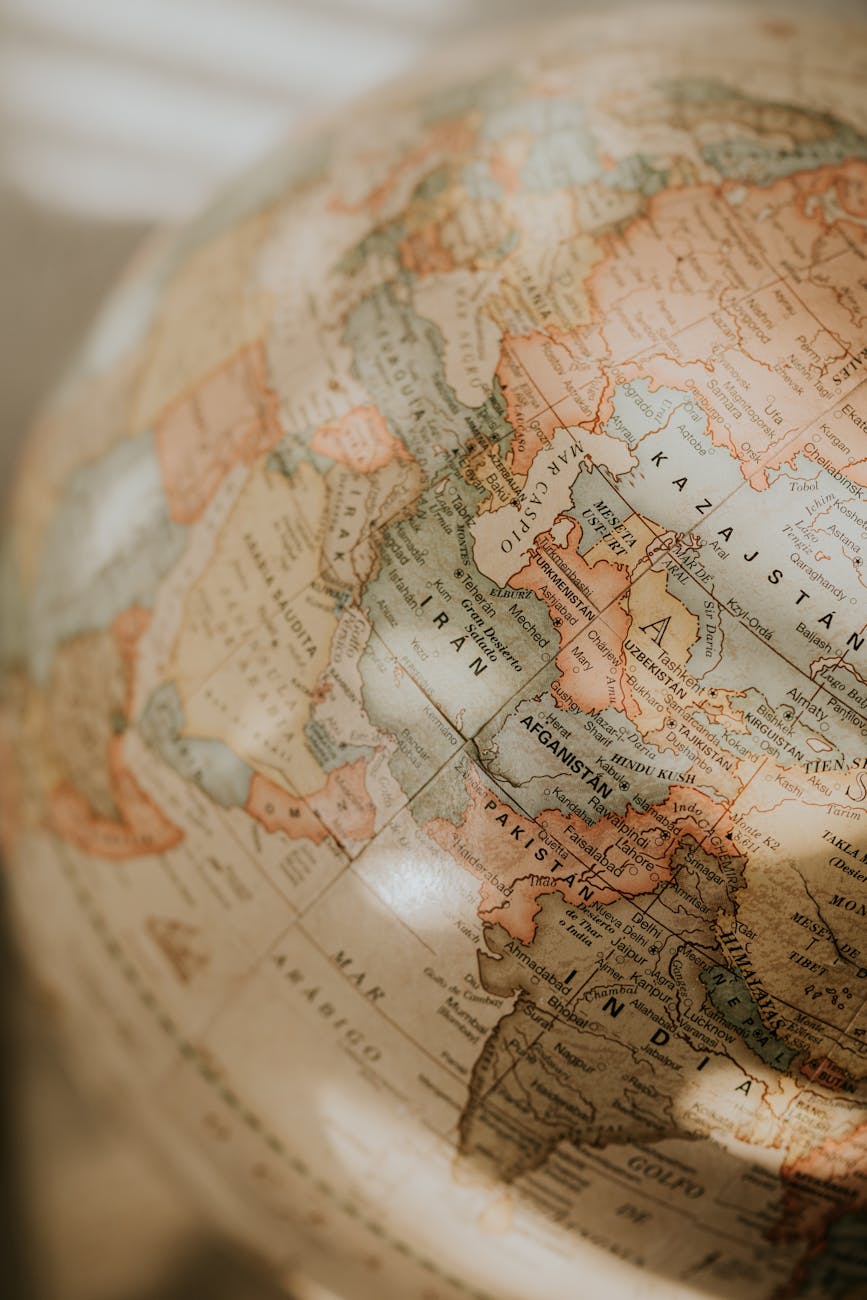
The Afghan embassy in Pakistan has warned that the Pakistani government wants to remove all Afghan refugees from Islamabad and the neighbouring city of Rawalpindi. Islamabad is the capital and home of the country’s political class, while Rawalpindi is home to the Pakistani Army’s General Headquarters.
In November 2023, the Pakistani government launched a controversial crackdown on Afghan refugees staying in the country, many of whom are undocumented. The Pakistani government’s justification for this is that many Afghans pose a security risk. The government accuses Afghanistan of not doing enough to stop Tehrik-i-Taliban Pakistan (TTP), a militant offshoot of the Taliban that formed in 2007 and has been responsible for various attacks in Pakistan, notably the 2014 Peshawar School Massacre, where militants killed 149 people, mostly school children, many of whom were related to the political elite. Pakistan accuses the Taliban of not doing enough to curb attacks by TTP inside Pakistan.
Pakistan currently hosts around 2.5 million Afghans, according to government estimates, with half of them being registered with the United Nations High Commissioner for Refugees (UNHCR). Those registered earlier had their stay extended until June 2025, and Pakistani officials say they would not be arrested or deported at least until the extension expires.
Pakistan’s relationship with Afghanistan has been tense for much of its history. Afghanistan was the only country to vote against Pakistan’s admission to the United Nations due to territorial disputes over the mostly Pashtun region of Khyber Pakhtunkhwa. In the 1970s, Pakistan helped the United States and Saudi Arabia, among others, support the Mujahideen to destabilize and ultimately overthrow the Soviet-backed Afghan socialist government. In the 1990s, Pakistan supported the Taliban in the Afghan Civil War. It was one of the few countries to recognize the Taliban government, along with Saudi Arabia and the United Arab Emirates, during its first stint in power from 1996 to 2001. Despite officially supporting the U.S. in the War on Terror, Pakistan maintained links to the Taliban throughout the war, leading to deteriorating relations with the West.
However, because of the rise of TTP and their attacks inside Pakistan, relations between the Taliban and the Pakistani state have been tense.
However, another significant development in Pakistani politics has occurred since. In 2022, Pakistan’s popular Prime Minister, Imran Khan, was ousted by the parliament in a no-confidence vote. This vote was likely influenced by the Pakistani military, which has had tremendous influence in Pakistani politics since the 1950s, including four military dictatorships and coups over civilian governments. The military was a backer of Khan in the past but fell out with him during his time in office.
Since his ousting, Khan and his supporters have taken to the streets and been met with extreme violence.
The election last year was accused by many of being rigged by the military. Since then, Khan was arrested and convicted of corruption, charges many accuse of being politically motivated. However, the political unrest has not stopped. Amid extreme unpopularity, the government and political elite have stirred up sentiment against Afghan asylum seekers who were already stigmatized in Pakistani society.
The targeting of Pakistan’s Afghan population comes after decades of Afghan asylum seekers living in the country. The recent move comes amidst a diplomatic crisis and a tumultuous domestic political situation. The government has set March 31 as a deadline for the removal from Islamabad and Rawalpindi. How the government will handle the issue after that remains to be seen.
Brazil prosecutor charges ex-President Bolsonaro over alleged coup plot
Brazil’s chief prosecutor has accused former Brazilian Prime Minister Jair Bolsonaro of an attempted coup following his election defeat in 2022. According to the prosecutor, the plot was to prevent Bolsonaro’s successor, Lula da Silva, from coming to power. The prosecutor is referring to the January 8 attacks, when a mob of Bolsonaro supporters attacked various government buildings in Brazil’s capital, Brasilia, on January 8, 2023.
Brazil’s political climate remains tense and divided. Bolsonaro and his supporters protest that he is innocent while his opponents celebrate the verdict. Some have compared the attack to the January 6 Attacks, when supporters of President Donald Trump stormed the U.S. Capitol to prevent the certification of his election loss to Joe Biden. Trump and Bolsanaro enjoy a good relationship. Like Bolsonaro, Trump was also put to trial following his support for the January 6 riots, however, he has won re-election and is now back in power.
Unlike Trump, Bolsonaro is not allowed to run for re-election until 2030, but many say he could use a potential trial as a political platform. The situation in Brazil is delicate, as Bolsonaro capitalized off a divisive atmosphere to come to power. He is controversial for his comments about women and LGBT people, his incitement of political violence, and his support for Brazil’s military dictatorship from the 1960s through the 1980s, among other comments he has made. His presidency was notable for Brazil having an incredibly high death rate during the COVID-19 pandemic and a massive amount of deforestation of the Amazon Rainforest.
The charge will go to Supreme Court Justice Alexandre de Moraes, who will decide whether to proceed. Brazil has had a delicate political situation for years now. President De Silva was put on trial for corruption a little over a decade ago, in charges many accuse of being manufactured. His successor, after his first two terms, Dilma Rousseff, Brazil’s first female President from 2011 to 2016, was also impeached on corruption charges.
Bolsonaro’s charges come as Brazil has an election next year. Bolsonaro’s trial could inflame Brazil’s already tense situation ahead of that election.
Philippine VP Duterte’s backers ask Supreme Court to throw out impeachment
Filipino Vice-President Sara Dueterte’s supporters have urged the Supreme Court to dismiss impeachment charges against her, accusing them of being politically motivated. Dueterte is undergoing impeachment for corruption and betrayal of public trust. Lawyers supporting her argue the motion was filed without due process and should be thrown out.
Dueterte has been Vice President to Ferdinand Marcos Jr., whom she was previously a staunch ally of but has since fallen out with. She is the daughter of controversial former President Rodrigo Dueterte, known internationally for his controversial war on drugs, which included voicing support for extrajudicial killings of suspects involved in the drug trade. Additionally, he aimed to pursue a more independent foreign policy, bringing the Philippines closer to Russia and China, and launched a crackdown on corruption.
Dueterte fell out with Marcos because he denounced the bloody crackdown by his predecessor, the elder Dueterte. Additionally, he only gave Dueterte the education portfolio when she wanted defence, and he remained neutral when the elder Dueterte was under an ICC investigation.
The House impeached Dueterte on February 5, and she is set to be tried by the Senate in the summer. Among the charges against her are claims of her ties to an alleged assassination attempt on Marcos Jr. This stems from an expletive-filled broadcast where she talks of telling a man to kill Marcos if she dies first. Dueterte claims she was merely venting frustration with the administration.
Simultaneously, the elder Dueterte is under investigation after saying publicly that 15 Senators should be killed to free up spots for the midterm elections. The elder Dueterte has been known for making remarks like this; however, unlike before, this one is taken seriously, as police have filed a criminal report to the Ministry of Justice.
It is worth noting that while Rodrigo Dueterte was accused of acting like a dictator, Marcos Jr’s father, Ferdinand Marcos Sr, did rule the country as a dictator for 21 years, declaring martial law in 1972 to consolidate power. His term was known for various human rights abuses. Despite condemning the elder Dueterte’s abuses, Marcos Jr. defends his father and works to rehabilitate his image. In this tense situation, many have accused this recent impeachment of being a political plot to disqualify his vice president from the 2028 Presidential Election as part of the newest power struggle between the former allies.
Germany’s far-left party sees membership surge before election
With the German election on Sunday, the European Union’s most populous and largest economy braces itself for a new government. The incumbent Scholz government is notoriously unpopular, with all three parties polling at less than 40% together.
The main opposition party, the Christlich Demokratische Union (CDU), is set to become the largest party and has been leading the polls for years now. The largest opposition party will likely be the far-right Alternative für Deutschland (AfD). This is followed by Chancellor Scholz’s party, Sozialdemokratische Partei Deutschlands (SPD), and his coalition partner Die Grünen.
However, one of the biggest surprise stories this election has been the revival of the Leftist party Die Linke, which failed to meet the 5% threshold last time and only got proportional representation because it managed to win three constituency seats. In Germany, seats are divided between constituency seats, similar to the British parliamentary system, and proportionally distributed seats, similar to the Netherlands. However, unlike the Netherlands, to get any of the proportional seats, parties must meet a threshold of 5% in the vote share. Alternatively, if they win three constituency seats, they are also eligible. In the last election, Die Linke managed to win three, barely holding on.
Linke had a massive schism a year and a half ago, with controversial member Sahra Wagenknecht leaving the party and forming her own party, Bündnis Sahra Wagenknecht – Vernunft und Gerechtigkeit (BSW). While Linke takes a progressive position on cultural issues, BSW takes a more moderate approach, advocating a stricter migration policy and criticizing “woke” politics. BSW is also considerably more against Germany providing aid to Ukraine.
Many thought Linke was politically dead, as Wagenknecht amassed a loyal following and secured many key defections. Additionally, Linke has been struggling for years, falling out of three state parliaments since the last Federal election.
However, in the last month, the party has seen a resurgence. Nearly 23,500 people have joined Linke since the beginning of the year, bringing membership up to 81,200, the highest since 2009. Additionally, Linke jumped from 3% to 7% in the polls in two months. Wagenknecht’s offshoot BSW, meanwhile, has stagnated and hovers around the 5% threshold.
However, whether this will translate on Sunday remains to be seen. Regardless, Linke must learn from its history to maintain this. In the past, it had several internal divisions. It struggled to distance itself from ties to the former East Germany, with Linke’s predecessor party, Partei des Demokratischen Sozialismus (PDS), as the director successor to the Sozialistische Einheitspartei Deutschlands (SED).
Additionally, despite officially condemning dictatorship, members of Die Linke have defended the East German regime in the past. While many in party leadership condemned the Russian invasion of Ukraine, many in Linke opposed supporting Ukraine at the beginning of the war, and some members even supported Donbas separatists in 2014. Most of these people have left Linke for BSW, but if the party wants to return to being an effective force in German politics, it must secure a united front within itself.

Leave a Reply