
In line with GA! ‘s aspiration to connect current events with history, you can find this week’s headlines below, provided with additional commentary from a historical perspective.
“French PM Bayrou survives no-confidence votes thanks to far-right”
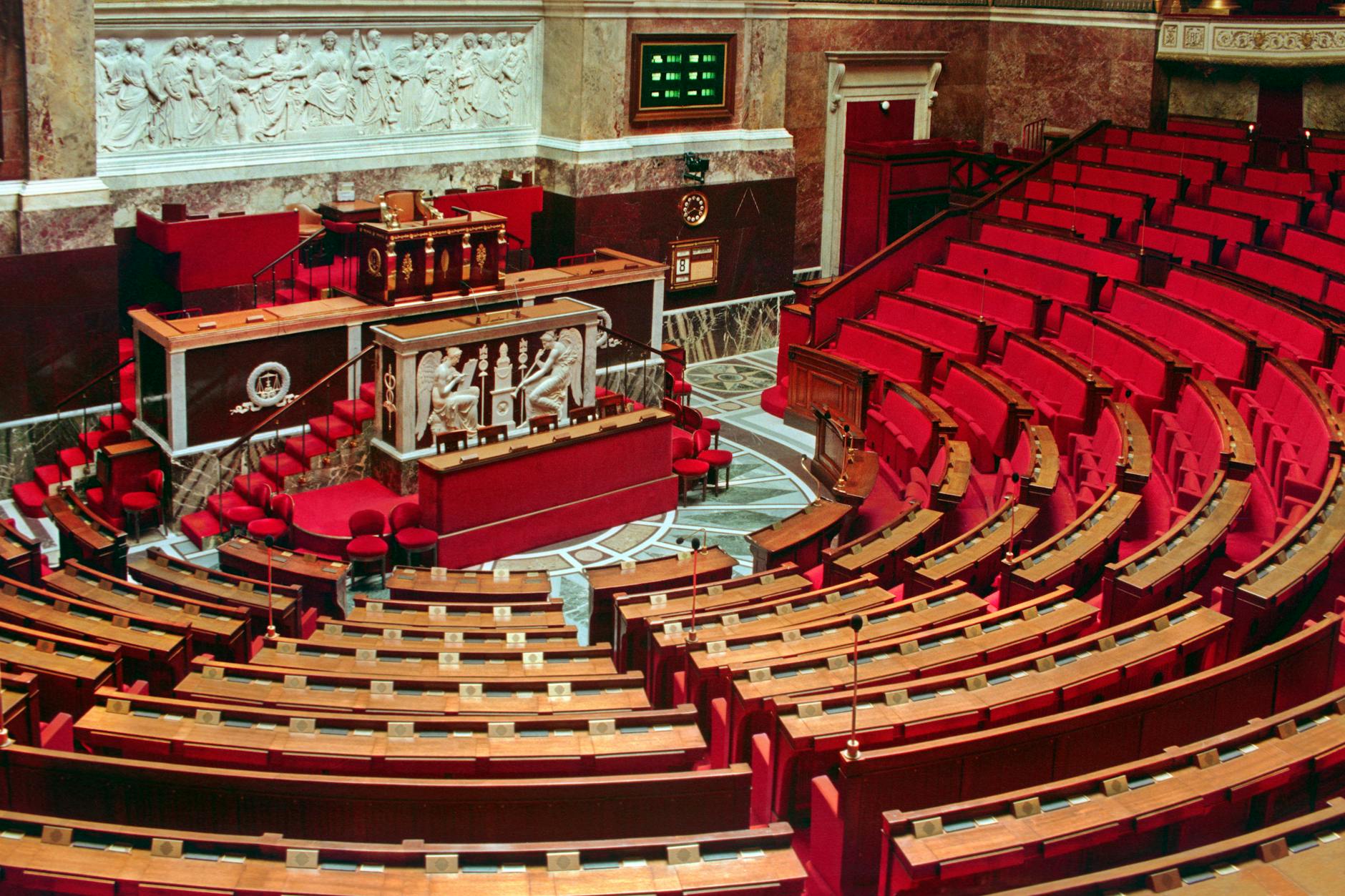
French Prime Minister François Bayrou survived a no-confidence motion after getting the support of the Rassemblement National (RN) party led by Marine Le Pen. Bayrou has been in office for less than two months yet has had a tumultuous tenure, facing several no-confidence votes. This is because Bayrou’s government is a minority coalition composed of the liberal parties in the Ensemble coalition, which Bayrou and French President Emmanual Macron belong to, and the centre-right Gaullist Les Républicains (LR). The coalition is short a majority and needs to gain the support of either the left-wing coalition Nouveau Front Populaire (NFP) or RN.
Following elections this past July, France’s liberal centrist government has had to balance these two blocs carefully. The transformation of French politics into a balance of three blocs is relatively recent. In the past, France was dominated by the centre-left Parti Socialist on the Left and LR and a series of preceding Gaullist parties on the Right. However, in 2017, France experienced a political earthquake when newcomer Emmanual Macron emerged victorious in the Presidential election that year.
In France, the Prime Minister is appointed by the President and approved by the parliament. Following the 2017 Legislative elections, Macron’s liberal party, La République En Marche (later renamed Renaissance), won a majority, giving Macron and his Prime Ministers a strong mandate for his first term. However, in 2022, Macron’s party (now part of the Ensemble coalition) lost that majority, resulting in a hung parliament for the first time since 1988. Following this election, three blocs emerged: Macron’s Ensemble coalition, Nouvelle Union Populaire Écologique et Sociale (NUPES), a predecessor to the NFP, and a coalition between PS, the Greens, the communists, as well as La France Insoumise (LFI), led by controversial left-wing politician, Jean-Luc Mélenchon, and RN, led by Le Pen.
This resulted in the government relying often on Article 49.3 of the constitution, a controversial move that allows the government to bypass parliament unless parliament passes a no-confidence measure in the next 24 hours. Macron called for a snap election after poor results for the Ensemble coalition in the 2024 European election. Ensemble’s plurality was again reduced this time, further cementing the three-way split in French politics. Since then, the centrist government has struggled to pass its agenda, facing opposition from the NFP or RN and relying on one or the other to get its agenda through.
However, the real story is the institutionalisation of France’s far-left and far-right. On the Right, RN and Le Pen have successfully rebranded, previously being known as the Front National (FN). While FN came to prominence in the 1990s due to debates surrounding migration, the party was often seen as too extreme to be let near power. In 2002, when Le Pen’s father, Jean-Marie Le Pen, made the second round of the Presidential election, every other party rallied around the centre-right Gaullist President Jacques Chirac, and Le Pen won less than 18% of the vote to Chirac’s over 82%. The fact that the younger Le Pen has made the second round twice and established her party as a dominant bloc in parliament showcases her success in RN’s normalisation.
Meanwhile, on the Left, while PS was once the most prominent voice on the French left, the largest party in both NUPES and NFP has been LFI. LFI, unlike PS, is an explicitly anti-capitalist party, critical of NATO, and has Eurosceptic tendencies. Mélenchon’s controversies have caused issues in the coalition; however, so far, it remains united.
Liberals in France must reckon with the fact that French politics is now divided so that they are dependent on either the Left or the Right to govern. Bayrou survived thanks to support from RN; however, RN has said they are willing to vote for a no-confidence motion if they see fit. This leaves French liberals between a rock and a hard place for the coming years. President Macron will likely have to find a way to navigate this balance if he hopes to pass any of his agenda.
“US judge blocks Trump buyout program as 60,000 sign up to quit.”
The Trump administration offered U.S. government workers a buyout last week. The deadline to accept the offer was 11:59 EST Thursday, February 6. Reportedly, 60,000 federal employees have accepted the buyout, according to a White House source. A U.S. federal judge recently delayed the move until Monday, but it comes as the latest step in taking on the administrative state. Since taking office, Trump has fired a slew of federal appointees throughout the U.S. federal government. This buyout offer hopes to get rid of thousands more.
Those who did not take the buyout have been warned that their jobs could still be cut later. Unions have urged workers not to accept the offer and are attempting to fight the buyout effort in court.
The effort is reportedly being spearheaded by Elon Musk, the billionaire founder of SpaceX and Tesla, owner of X, formerly known as Twitter, and, under Trump’s new administration, head of the Department of Government Efficiency. Musk promises to cut $6.7 trillionfrom the Federal budget, with most of the cuts coming from massive layoffs. After buying X, Musk fired nearly 80% of the staff, a strategy he seems to be implementing with the federal government.
To understand this current phenomenon, we must look at American history. Musk is not the first ultra-wealthy businessman to have significant influence over the state. In the 19th Century, during an era known as the Gilded Age, American politics was controlled by a handful of influential businessmen who formed monopolies among various industries. Many analysts point to parallels between the Gilded Age monopolists like J.D Rockefeller, Andrew Carnegie, and J.P Morgan with today’s tech billionaires like Musk, Mark Zuckerburg, and Jeff Bezos, all of whom were front and centre at Trump’s inauguration.
Secondly, Musk’s firing of these workers, while ostensibly coming from a desire to reduce the federal debt and deficit, may have other motivations behind it. For decades, the Republican Party decried what it called “big government.” Former President Ronald Reagan even said, “The nine most terrifying words in the English language are ‘I’m from the government, and I’m here to help.’” This sentiment has been present throughout the history and ideology of the American Right. After perpetuating for 40+ years that the Federal Government is wasteful, inefficient, and bloated, Republicans aim to reduce the size of the state. This reduction comes at a cost, and we see it with massive layoffs across the U.S. government.
We are seeing today the consequences of years of increasing wealth inequality and the perpetuation of the notion that the state is filled with waste and unnecessary bureaucracy. Musk represents a perfect blend of these two trends. The U.S. government now has a very powerful businessman who is deeply distrusting of a “bloated state” and actively looking to run the nation like he would run a corporation. In the quest to eliminate waste, Musk’s efforts will redefine the state’s role for years to come.
“Trump agrees to pause tariffs on Canada and Mexico but not on China.”
One of Trump’s key policies since coming back to power has been the threat of Canadian energy imposing tariffs. Trump promised 25% tariffs on Mexico and Canada, except for, which would have a tariff of 10%. He also promised a 10% tariff on China.
On Monday, Trump was able to come to a deal with Canadian Prime Minister Justin Trudeau and Mexican President Claudia Sheinbaum. Mexico agreed to deploy 15,000 troops at the border, while Canada decided to implement a border plan that included increased cooperation with American law enforcement. These measures are done to stem the flow of illegal migration and drugs such as fentanyl. Trump would follow through on tariffs against China, who would implement retaliatory tariffs in response.
The move highlights a key aspect of Trump’s foreign policy. Economic brinkmanship. In his first term, Trump imposed a series of measures, especially against China, as part of the U.S’ geopolitical strategy against China. He also pushed for targeted tariffs on certain products from the European Union, such as steel and wine. Under his current term, his tariff policy is much broader and used not just punitively but as a negotiating tactic.
Tariffs are not new to the U.S. For much of its early history, they were the main source of revenue for the Federal government, as the U.S. did not have a federal income tax until 1913, except for a short-lived one during the Civil War. However, the world has changed significantly since the 19th Century, an era Trump seems to wish to emulate. He recently renamed Mount Denali to Mount McKinley, named for 19th-century U.S. President William McKinley, another proponent of high tariffs.
But the U.S. economy today is far more globalised. His tariff policies would cause major disruptions to supply chains, increasing prices for consumers.
However, Trump seems willing to proceed because his aim seems to be to turn the U.S. back to the 19th Century. His disregard for international agreements and alliances, his embrace of the Monroe Doctrine, and even his tariff policies all seek to emulate a time when America was, in his mind, truly independent, free of responsibilities to its allies and put its own interests first.
“Milei to pull Argentina out of WHO, mirroring Trump” & “Hungary floats WHO withdrawal after Trump and Milei exits”
Trump’s withdrawal from the World Health Organisation has sparked a major shockwave for the organisation. Trump claimed the organisation was biased and under the influence of China. Following the U.S. withdrawal, Argentine President Javier Milei pulled Argentina out of the WHO, echoing similar claims. Viktor Orban’s Hungary alluded to the possibility it may follow suit. Additionally, the Deputy Speaker of the Russian Parliament Pyotr Tolstoy made similar statements regarding Russian membership.
With two countries leaving the WHO, including its largest funder, the U.S., and two other nations openly discussing leaving Trump’s actions have caused a domino effect. If Hungary and Russia follow through, it could significantly damage the WHO’s credibility. We can look at history to see the danger of this. In 1933, the decision of Germany and Japan to leave the League of Nations would severely undermine the organisation institutionally, paving the way for an Italian exit in 1937 and a Spanish exit in 1939. This ultimately led to the League’s dissolution following WW2.
While it is too early to make such a projection for the WHO, if more countries follow the U.S. and Argentina, it could have devastating consequences for the WHO and international cooperation on Global Health.
“Arab nations reject Trump’s suggestion to relocate Palestinians from Gaza to Egypt and Jordan.”
Trump recently proposed a plan that aims to move Palestinians from Gaza into Egypt and Jordan. Following this announcement, Egypt, Jordan, Saudi Arabia, the United Arab Emirates, Qatar, the Palestinian Authority and the Arab League released a joint statement rejecting any plans to move Palestinians out of their territories in Gaza and the occupied West Bank.
Israeli officials made the proposal early in the war, and Trump himself said he would push leaders in Egypt and Jordan to accept the deal. Egypt was the only country other than Israel not affected by Trump’s foreign aid freeze in his first week.
In his first term, Trump forged close relations with Arab leaders, especially Egypt, Saudi Arabia, and the United Arab Emirates. The Arab leaders’ flat rejection of Trump’s proposal in a united stand raises the question of whether his second term will see the same friendly relations.
Egypt, Jordan, and the United Arab Emirates have all taken the step to recognise Israel, with active support from the U.S.
Additionally, the U.S. and Trump have been attempting for years to forge a similar deal between Israel and Saudi Arabia. However, the most recent war in Gaza, Trump’s plan for the Palestinians, and now the Arab leaders’ response complicates such a deal. Additionally, it puts pressure on Arab governments that recognise Israel despite massive public disapproval. It is worth remembering that the Egyptian leader, Anwar El-Sadat, who recognised Israel, faced immense political and personal consequences, including assassination at the hands of militants opposed to normalisation.
Trump has maintained good relations with several countries in the Middle East. However, the issue of Gaza, which remains politically sensitive, risks upending that positive relationship.
“German election: CDU, Merz drop in poll after AfD vote”
Germany is set for a contentious election in two weeks. For over a year, the main opposition party, the Christian Democratic Union (CDU), led by Freidrich Merz, has remained on top. However, recently, the CDU and Merz made a controversial decision to use support from the far-right Alternative for Deutschland (AFD) party. This was a massive break from precedent and led to nationwide protests against Merz.
During that period, the Forsa Institute conducted a survey, which showed the CDU dropping 2% percentage points in the poll. While the CDU remains on top, this is the lowest they have polled since October 2023.
Even more notable was that Merz’s personal chancellor approval ratings fell three points from 25% to 22%. This puts him on par with the Greens’ chancellor candidate, Robert Habeck.
Incumbent Chancellor Olaf Scholz of the Social Democrats is tied with the Afd’s Alice Weidel at 16%.
While the CDU remains on top, the backlash shows that collaboration with the Afd remains a controversial move. Due to Germany’s history with the Far Right and the Second World War, there was a long-standing precedent of isolating Far-Right parties from power and collaboration. However, with the Afd now remaining steady in second place and polling at around 22%, it becomes harder to ignore for the other German political parties.
How to tackle the AFD remains a contentious issue, which will undoubtedly play a significant role in German politics in the coming future. How the German political class chooses to deal with the AFD will also be affected by how they choose to address German history.



Leave a Reply