
In line with GA!’s aspiration to connect current events with history, you can find this week’s headlines below, provided with additional commentary from a historical perspective.
“In world’s largest refugee camps, Rohingya mobilise to fight in Myanmar”
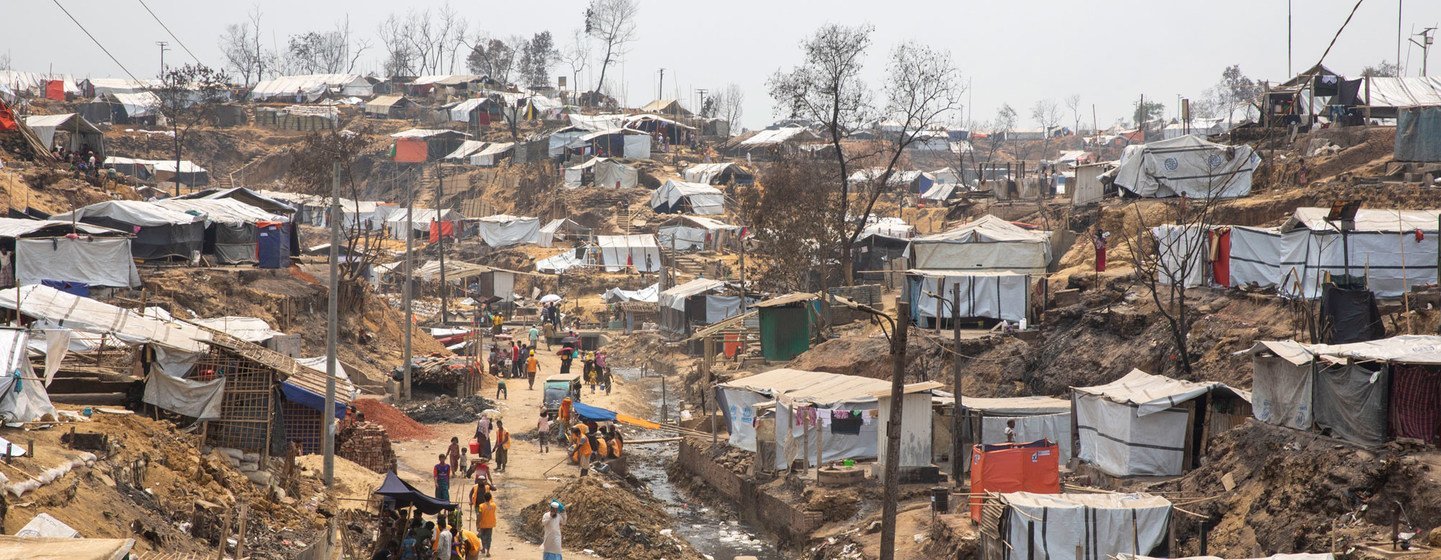
In the world’s largest refugee camp in southern Bangladesh, just over the border with Myanmar, new upheavals are brewing for the Rohingya minority. Reports have started to emerge that the Myanmar army is recruiting able bodied Rohingya men of fighting age to join those who persecuted them only a few years back, to fight against the Arakan Army, a Buddhist ethno-nationalist group fighting the Myanmar government. Judging by these reports, the civil war in Myanmar has gotten a new even more complicated ethnic dimension.
Advanced societies existed in Myanmar before the British colonised it in 1885 and added it to their possessions, collectively known as British India. After gaining independence in 1948, Myanmar was practically ruled by its military until 2011. However, since Myanmar has attempted to construct a democratic society, violence has erupted. The main focus of the violence which started in 2016, has been in Rakhine State. While a majority of Myanmar’s population is Buddhist, a large Muslim minority lives in this province.
This minority has been subject to oppression and persecution for decades. The central authorities of Myanmar never acknowledged them as citizens and thus they were essentially stateless. After clashes between Rohingya groups and the Myanmar military in 2016, the authorities seized on these events as a justification for them to brutally attack the Rohingya. What followed has been internationally recognised as genocide.
The genocide which started in 2016 has resulted in at least 30 thousand deaths and at least 700.000 Rohingya have been forced to flee, but numbers are likely higher. This campaign against the Rohingya was waged by the Myanmar army in cooperation with some ethno-nationalist Buddhist groups such as the Arakan Army. When the genocide started in 2016, the Myanmar government represented a unity between these factions. However, after a coup by the Myanmar military in 2021, civil war has broken out and these factions are now facing each other.
The brunt of the violence still lies in Rakhine State, the province where the Rohingya used to live. It seems that now the Myanmar military, in an effort to battle the Arakan Army, has started recruiting men from the enormous refugee camps across the border in Bangladesh to fight alongside them. The living situation in these camps is dire and violence rules these camps. Refugees have not been permitted to work by the authorities in Bangladesh, so fighting may prove the only way to perhaps earn a living. However, it is not clear if the men being recruited are also being paid. What is clear is that they are recruited with the motivation ‘to take back their land ’ by those who took their land from them in the first place, thus creating a new dimension to a gruesome conflict with no end in sight.
“Bolsonaro sidelined from Brazil’s political scene as Trump enjoys resurgence”
In Brazil, former president Jair Bolsonaro is being targeted with all sorts of legal action to ban him from Brazilian politics for the foreseeable future. Often dubbed ‘the Brazilian Trump’, Bolsonaro has been banned from participating in the upcoming elections. Unlike Trump then, he cannot evade persecution by influencing the trials against him from a position of power, if he were to be reelected. Bolsonaro has currently got three criminal investigations facing him and he may have to stand before the Brazilian Supreme Court for instigating a coup after he lost the election in 2022.
Jair Bolsonaro was elected president of Brazil in 2018, copying the style of politics of Donald Trump to a large extent. Like Trump, Bolsonaro tried to use the military to increase his powers but did not succeed. When he was defeated by Luiz Lula da Silva in the 2022 elections, Bolsonaro left for the United States before his rival was sworn in. A few days later, his supporters attacked multiple Brazilian governmental buildings, the Supreme Court, the parliament and the Presidential Palace, in events remarkably similar to those of January 6 2021 in Washington D.C. Bolsonaro distanced himself from the actions of his supporters but is still seen as partially responsible for these attacks.
As a result of these events, Bolsonaro was barred from Brazilian politics until 2030. Brazilian courts have a powerful position in making sure elections happen in a fair manner and in constraining the power of politicians. Bolsonaro is suspected of trying to instigate a military coup, something not unfamiliar to the history of Brazil and of Latin America. Bolsonaro himself has often even spoken with praise of the military junta which ruled Brazil for some twenty years.
During the Cold War, the United States instigated many coups by military leaders throughout Latin America in order to counter the spread of communism. The most famous example of this is the CIA’s alleged involvement in the coup of Augusto Pinochet in Chile against the democratically elected socialist Salvador Allende. The peak of this policy came in the middle of the 1970’s under the direction of Henry Kissinger. A formal system of cooperation between the various junta’s was set up under the auspices of ‘Operation Condor.’ Besides Pinochet, other brutal dictators such as Argentina’s Videla and Galtieri worked together with their fellow autocrats on the continent. Estimates vary, but several tens of thousands of people have been killed under Operation Condor because they were deemed political enemies of these dictators, with hundreds of thousands estimated to have been imprisoned during this period.
Fortunately, the democratic political systems in many of these countries have gotten stronger over the past decades and leaders such as Bolsonaro have not been able to gain absolute power. However, leaders with rightwing worldviews remain popular, as seen by the election of Javier Milei in Argentina, who portrayed himself as a strong anti-communist. What will come of the trials against Bolsonaro remains to be seen, but the institutions seem to be able to fight against someone who wants to undermine democracy.
“Europe is under attack from Russia. Why isn’t it fighting back?”
Since 2021, and particularly since the start of the war in Ukraine, European countries have seen a large uptick in suspected Russian acts of sabotage all over the continent. As part of Russia’s doctrine, they retaliate for escalations on the battlefield in Ukraine, not by firing missiles at Europe, but by carrying out clandestine operations in order to sow chaos within European societies and eventually break the will of leaders to keep supporting Ukraine because of public unrest. The cutting of underwater internet cables between Germany and Finland is an example of this, as well as several packages which were supposed to find their way onto freight planes to then explode, but fortunately didn’t. As described in last week’s story about defectors, Russia has not shied away from operating on European soil in secret to disrupt Europe’s politics, economies and societies in general. The largest of these operations is the scheme being run from Belarus by which migrants are picked up in the Middle East and then driven towards the Polish border. By pushing those migrants into the EU, Russia and Belarus attempt to create great societal friction and disrupt normal politics. Because the Poles have now built a fence along this border and patrol it vigorously, many migrants are stuck in a no man’s land in Belarus. Because the US has now allowed the Ukrainians to strike within Russia with their weapons, expectations are Russian efforts to reap chaos in Europe through actions of sabotage will increase.
“‘They came and demolished everything’: Palestinians fear more evictions in the West Bank under Trump”
With the election of Donald Trump, Palestinian citizens in the West Bank fear an increase in violence against them. The West Bank has been occupied by Israel since the Six Day War in 1967. It was occupied by Jordan before then from 1949 onwards after the First Arab-Israeli War. After Israel conquered the territory, it was decided through United Nations Security Council Resolution 242 after the Six Day War that Israel should leave all occupied territories. While Israel did eventually leave the Sinai Desert and handed this land back to Egypt, Israel remained in the Gaza Strip, the Golan Heights which it had captured from Syria and the West Bank. Since 1967, the Israelis have undertaken various policies aimed at building settlements on the West Bank and restricting the freedom of Palestinians here. These policies have gathered pace particularly in the past twenty years. Around half a million Israelis now live in illegal settlements built on occupied land, often obtained by illegally evicting the Palestinian population. Donald Trump may allow extremist forces in the Israeli government to fulfil their wish of full annexation of the West Bank, or Judea and Samaria as they call it. However, since October 7, many Arab nations, including Saudi Arabia, have stated they will not enter negotiations with Israel to normalize relations unless a Palestinian state is finally properly realized. Trump achieved some stability in the Middle East in his first term through the Abraham Accords but will thus face more challenges if he wishes to emulate those achievements. Trump and Israel thus face a choice: annex the West Bank and alienate and entice the region against them, or work towards a Palestinian state and normalize relations in the region.
“Merkel rejects criticism over Russia gas deals”
Angela Merkel has published her memoirs. The former German Chancellor, who governed Europe’s most populous country and largest economy for fifteen years from 2006 to 2021, reflects back on her time in office and the consequences of some of her decisions which are now presenting themselves. On Russia, Merkel has few regrets and is strongly of the opinion that her refusal, along with that of then French President Sarkozy, to admit Ukraine into NATO in 2008, would have sparked war in Europe sooner. Merkel grew up in East Germany. The wall came down when she was 35 years old and she developed a relatively healthy relationship with Vladimir Putin because she spoke Russian and Putin had worked in East Germany. While this relation now faces criticism, she does not have any regrets. Her defining moment, proclaiming “wir schaffen das” (we can manage) about the European migration crisis in 2015 has somewhat come back to haunt her. Migration is the key topic which has led to the rise of right-wing populist parties throughout Europe. However, Merkel also managed to become the de facto leader in the EU and led the block virtuously, as former Italian Prime Minister Renzi recalled: “Do you remember when Henry Kissinger used to say ‘what is the telephone number of Europe?’,” he says. “My answer was: clearly, the mobile number of Angela Merkel.”
“NATO’s Rutte talks ‘global security’ with Trump in Florida”
NATO Secretary General Mark Rutte has visited President-Elect Donald Trump at his resort in Mar-a-Lago in Florida. The threats issued by Trump against the US’ NATO allies if they do not ‘pay their bills’, are by now well known. Fortunately for Europe, Rutte and Trump actually have somewhat of a cordial relationship. Figuring out how to work with Trump became a challenge for many leaders around the globe during Trump’s first term as president, but Rutte might have cracked the code. Rutte stood up to Trump in a very direct manner in front of the press when he visited the White House as Dutch Prime Minister. Trump seems to have some respect for those who do not automatically agree with him, for those who are not afraid to show their teeth when discussing with him. With Rutte now in the position of NATO SG, he may be able to soften the blow Trump will deal to the North Atlantic alliance.



Leave a Reply