
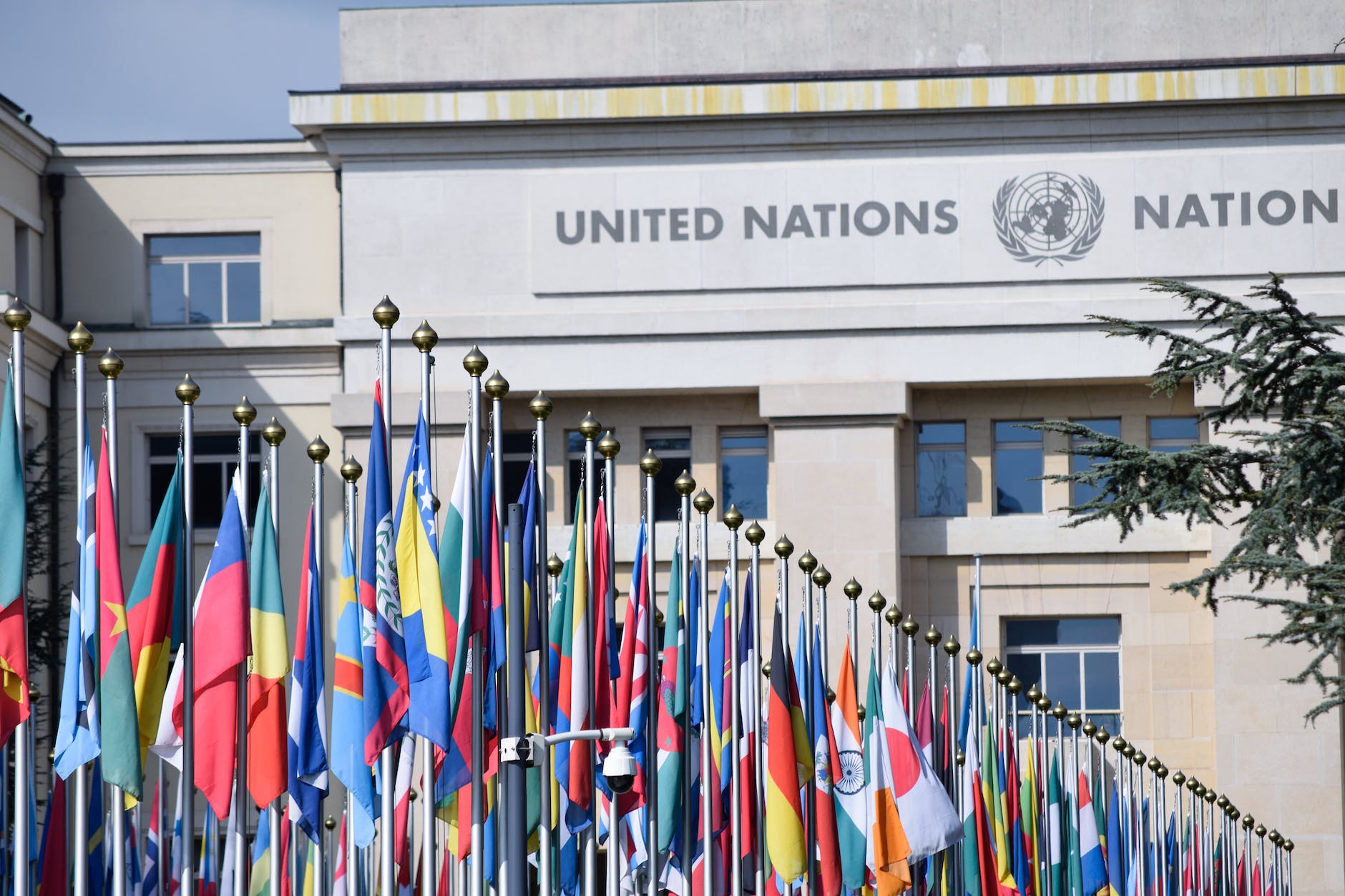
Russia’s UN declaration

Russia’s Foreign Minister Sergey Lavrov criticizes the West’s self-centered approach, fueling global conflicts. Surprisingly, he barely mentions Ukraine, and emphasize the need for a multipolar world order.
In a recent statement, Lavrov referred to the West as an “empire of Lies” and accused Western nations of engaging in a direct conflict with Moscow due to their support for Ukraine. He emphatically asserted, “You can call it anything you want, but they are fighting with us, they are straight-up fighting with us. We call it a hybrid war, but that doesn’t change things.”
Lavrov appears to be deliberately provoking the West, using Cold War-era terminology to evoke post-colonial sentiments. He contends that the West is attempting to impose its self-centered rules on the world, portraying the West as a neo-colonial force employing “unilateral coercive measures” against weaker nations and reshaping the international system to align with its preferences. This narrative may resonate with countries in the Sahel region, where Western influence is waning, and support for Russia is on the rise.
Lavrov is calling for a multipolar world to counter the Western plan.
In summary, Russia is employing Cold War rhetoric to accuse the West of exacerbating conflicts, dividing humanity into hostile blocs, and obstructing the achievement of common goals. This rhetoric reflects a growing escalation between the West and Russia and the countries aligning with Russia.
Biden’s UN Speech: Promoting Global Cooperation

President Biden’s UN General Assembly address highlights international cooperation, climate change, and the need to update global institutions. It represents a call for a more inclusive form of internationalism, which can be seen as a response to the previous administration’s isolationist stance under President Trump.
Historically, U.S. foreign policy has often leaned towards isolationism, with George Washington’s warning against permanent alliances serving as a foundational principle. This approach prevailed until Woodrow Wilson’s presidency, during which the U.S. began to envision itself as a global leader and advocate for a new world order based on the 14 Points.
However, the shift towards a more active role in global affairs truly materialized after World War II when the United States, in response to the devastation in Europe, assumed a central role in the reconstruction efforts and the shaping of the global order. This marked a departure from traditional isolationism.
The Trump administration’s “America First” policy marked a return to this isolationist trend. President Trump’s tenure was characterized by a dismantling of the notion of an “international community.” He aimed to redefine U.S. relationships with its allies, viewing alliances as burdensome rather than strategic assets. Trump’s approach leaned towards bilateral confrontations rather than multilateral cooperation, especially when dealing with challenges like China.
President Biden’s speech can be interpreted as a reaction to this recent history. Recognizing that the American public’s trust in international institutions and forums may have been eroded during the Trump era, Biden seeks to rebuild faith in these organizations by saiying that they should be “updated” being sensitive to “regions that have not been fully included.” His call for inclusive internationalism signals a commitment to working collaboratively on global issues rather than pursuing a unilateral path. This approach reflects a desire to restore America’s reputation as a constructive and engaged global partner, moving away from the isolationist tendencies of his predecessor.


Leave a Reply