
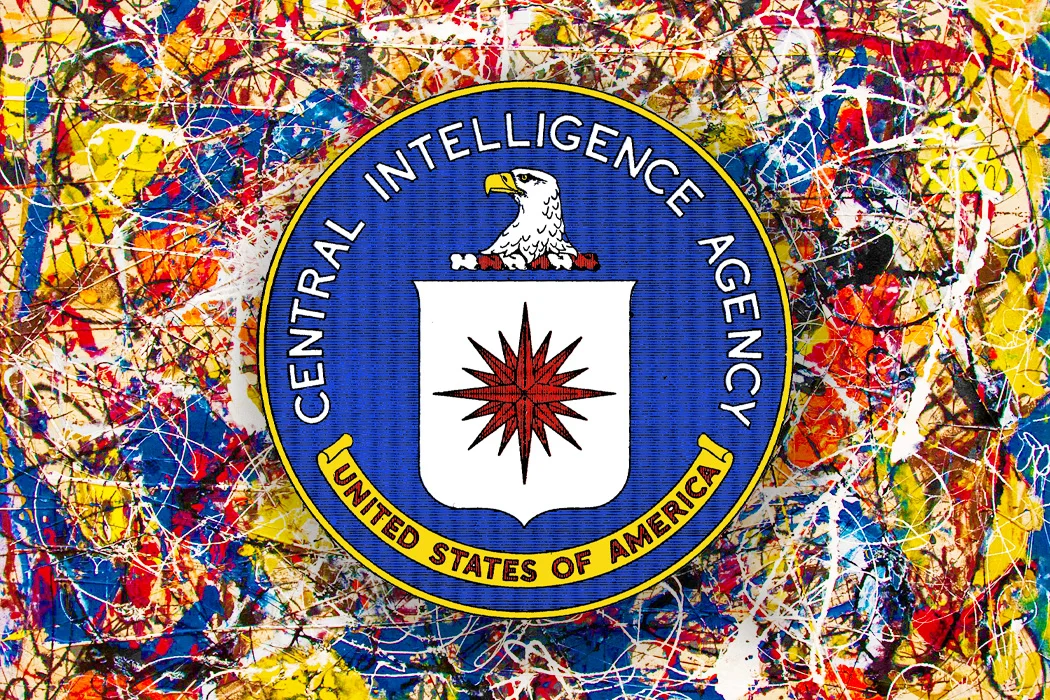
Abstract Expressionism’s crucial historical role as a powerful cultural weapon that, during 1940 and 1950, contributed to the assertion of America’s political power in the eyes of allies and enemies alike, can teach us important lessons, as is argued in this paper. Even if it may seem as if these practices of cultural propaganda pertain to times past such as the Cold War, it is shocking to read news about Russian troops looting Ukrainian museums in territories that have been illegally annexed by Russian President Vladimir Putin. Still, it is now, as it was then, an important part of the conflict.
The manipulation of art and its use as a powerful weapon during the Cold War has largely been relegated to the background when talking about weapons in the Cold War. There is an impressive amount of sources that address the development of atomic weapons and the posterior hydrogen bomb. But just as scientists were working behind the closed doors of isolated government laboratories on the development of these notorious weapons, inside the museums and galleries from New York to Moscow, an equally dangerous weapon was being created: art.
This article will focus on the role of Abstract Expressionism as a cultural weapon used by the CIA during the decades of 1940 and 1950. The controversial relationship between the CIA and Abstract Expressionism has raised the question of whether or not the CIA used this art movement to make America win a considerable advantage in the cultural, and, ultimately, political Cold War.
To navigate the controversial relationship between the CIA and Abstract Expressionism during the years of 1940 and 1950, a brief introduction on Abstract Expressionism and Socialist Realism, its Soviet counterpart, is in order. Abstract Expressionism saw the light in New York in the late 1940s, when, conditioned by the atmosphere of social unrest that emerged after the Second World War, a group of painters set out to explore a broad range of intellectual thoughts, from Existentialism to Freud’s psychoanalysis.[1] Its major exponents became the now famous names of Rothko, de Kooning, and Pollock. These artists discarded the portrayal of accurately drawn subject matters and chose to embrace Kandinsky’s abstract style, more fit to convey their feelings of alienation and loss of faith in the old system and old forms of expression. This decidedly American art movement was in total contrast with the style that was being promoted across the Iron Curtain: Socialist Realism, a markedly figurative style that promoted the soviet values and way of life. Soviet painters were supposed to “take a most pronounced stand against those bourgeois artists of Western Europe and America whose pathological concoctions stand for the art of their decaying societies”.[2]
Apart from their stark stylistic contrarieties, the global outreach the movements achieved also differentiated Socialist Realism from Abstract Expressionism. Socialist Realism did not achieve as much international relevance beyond the soviet side of the iron curtain during the 1950s, as Abstract Expressionism achieved, during the same time, an influential international status.[3] Scholar Elisabeth Mansfield ascertains a possible reason for this international fame to be the fact that New York replaced Paris as a center of cultural prominence due to the devastation of the European cultural centers, and the massive emigration of artists during the armed conflict.[4] Mansfield, however, does not consider the tight cultural agenda of the American Government and its plan to create a new set of cultural values that would debunk the soviet propaganda that portrayed America as a “decaying society”.
Artist Eva Cockcroft mentions how the overarching purpose in the American cultural agenda of the 1940s and 1950s was to “let it be known especially in Europe that America was not the cultural backwater that the Russians (…) were trying to demonstrate that it was”.[5] The American government swiftly understood the importance of demonstrating to the world that the Americans were not the dollar-crazy people that the Russian propaganda was portraying: they were also creative people.[6] As a result, the American government resumed its position as promoter of the arts, a role it had already taken up in the years immediately following the Great Depression. Nevertheless, the American political situation of the late 1940s was considerably different to the one the country had seen after the Wall Street Crash of 1929: starting in 1947, McCarthy’s “commie witch hunting” made it increasingly difficult for the American government to organize projects without the constant critique of the political right-wing and the intervention of the FBI. The solution to encourage artistic openness was to go covert and leave the coordination of cultural projects to an ‘external’ organizer: the Central Intelligence Agency.[7] In her book The Cultural Cold War the CIA and the World of Arts and Letter, Frances Stonor Sounders mentions how “here again was that sublime paradox of American strategy in the cultural Cold War: in order to promote an acceptance of art produced in (and vaunted as the expression of) democracy, the democratic process itself had to be circumvented.”.[8] The CIA proceeded to establish a special department to shape cultural policy and art campaigns, and after these plans and policies had been outlined the Agency focused on the patronage of Abstract Expressionism.
Cold War historian Kai Bird argues that the CIA was drawn towards Abstract Expressionism for the clear reason that the movement celebrated the individual creation and creator; it exuded the very basic American idea that the lone voice has the right to speak in its own interest as opposed to the collective voice. This was in clear opposition to the regimented, narrow Socialist Realism favored by the communists.[9] On the other hand, professor Serge Guilbaut suggests that it was in the CIA’s interest to build an image of the American artist as a super-male hero, and that those values were ingrained in the way these pictures were painted: with strength and violence.[10] The CIA thus chose to back this art movement due to the fact that its formal characteristics responded to the Agency’s pre-established plans. Moreover, we can accurately argue that it also set out to back specific artists that embodied the ideals on which the plan stood. It is therefore little wonder that the most famous Abstract Expressionist artists were men and, within this category, the most renowned of all was Jackson Pollock. Because what better than the works of a self-made, Wyoming-born artist to represent the ideals of the CIA’s plan?
Once the CIA had found an artistic movement that brought together all the values they wanted to project and had discovered artists to embody these, the Agency needed an institution that would host the exhibitions and would establish relations with galleries and museums all over the globe. The Museum of Modern Art (MoMA) in New York was a key player in the CIA’s intricate network of elite relations. The institution was connected to the Agency and the American government by several bridges: the first one was Nelson Rockefeller, whose mother had co-founded the museum. He became director of the museum in 1939 and although he vacated the presidency in 1940 to become coordinator of the government’s Office of Inter-American Affairs, which sponsored overseas art shows for propaganda purposes, Rockefeller continued to dominate the museum throughout the 40s and 50s and, returning as the museum’s president in 1946.[11] A second connection is the fact that after the Second World War, many members of the Inter-American Affairs that Rockefeller had coordinated were transferred to MoMA’s foreign activities.[12] Backed by this strong web of connections, the museum vigorously set about exporting American avant-garde art to Europe by way of pompous exhibitions that traveled all over the continent.
The most prestigious of all the exhibitions organized by the MoMA was The New American Painting, which toured Europe from 1958 to 1959. The first full-scale exhibition prepared for circulation outside the US, it traveled to cities like Madrid, Paris and London. Although responses to the show varied, approbation outweighed negative reactions from European critics. The Times called this exhibition ‘the aesthetic barometer why the United States should so frequently be regarded nowadays as the challenger to, if not actually the inheritor of, the hegemony of Paris in these matters’.[13] The exhibition thus successfully served the function of introducing abstract expressionist art into the European artistic and critical milieu. But its scope of influence was not reduced to Europe: during the post-Stalin era, under the more liberal government of Gomułka,[14] Polish artists, impressed by the work of Pollock and the other abstractionists, began to move away from Socialist Realism. In 1961, 14 Polish artists were given an exhibition at the MoMA.[15] Abstract Expressionism had triumphed behind the iron curtain, and so had the CIA.
Cockcroft argues that the links between cultural Cold War politics and the success of Abstract Expressionism are by no means coincidental: “they were consciously forged at the time by some of the most influential figures controlling museum policies and advocating enlightened Cold War tactics designed to woo European intellectuals.”[16] Europe’s rapid approval of Abstract Expressionism after the 1959 exhibition organized by the MoMA undoubtedly backs Cockcroft’s argument. On the other hand, MoMA’s defenders have consistently attacked the claim that the museum’s support of Abstract Expressionism was in any way linked to the covert advancement of America’s international image.[17] Waldo Rasmussen, Executive Director of the museum during the years in which these exhibitions circulated, affirms that relating the Museum of Modern Art’s International Program to cultural propaganda is “categorically untrue”.[18]
The crucial historical role of Abstract Expressionism as a powerful cultural weapon that, between 1940 and 1950, contributed to the assertion of America’s political power in the eyes of its allies and enemies alike, can teach us important lessons. While it may seem that these cultural propaganda practices belong to bygone eras such as the Cold War, it is shocking to read about Russian troops looting Ukrainian museums in territories that have been illegally annexed by Russian President Vladimir Putin. Reports have emerged of plans to “evacuate” museum collections in areas such as Crimea, Melitopol and Mauriopol,[19] under the premise that the artworks are being evacuated to safety. By declaring martial law in the annexed regions in October of 2022, Putin has “self-legalized” their kidnapping of Ukraine’s best art collections.[20] Art historians and IR experts have argued this move to be an effort to destroy Ukrainian cultural heritage, to damage Ukrainian historical and artistic identity forever.[21] Events such as this one are painful reminders that we must keep the present under constant scrutiny, be critical about the events we see happening around us, and exchange opinions on the multi-faceted debate that is artistic culture. This debate is nothing but enriched by looking at it from the insightful perspective of art history, international relations, and history. In short, cultural and artistic history and its movements have an impact on political events in the modern international world. Policy makers should not underestimate its power and the use of some political leaders/entities to change the world to their own ends.

[1] H. Harvard Arnason and Elizabeth Mansfield, History of Modern Art: Painting, Sculpture, Architecture, Photography, Seventh Edition (Boston: Pearson, 2013), 377
[2] Ibid., 297
[3] Ian Chilvers, “Abstract Expressionism” (Oxford University Press, 2004), https://doi.org/10.1093/acref/9780198604761.013.0014.
[4] H Harvard Arnason, and Elizabeth Mansfield. History of Modern Art: Painting, Sculpture, Architecture, Photography, 377
[5] Eva Cockroft, “Abstract Expressionism, Weapon of the Cold War,” in Pollock and After: The Critical Debate, 2nd ed. (London; New York.: Routledge, 2000), 127
[6] Frances Stonor Saunders and Frances Stonor Saunders, The Cultural Cold War: The CIA and the World of Arts and Letters, Paperback ed (New York: The New Press, 2013), 5-15
[7] Hidden Hands – A Different History of Modernism – Episode 1: Art and the CIA, Documentary, Hidden Hands (London, 1995), https://www.youtube.com/watch?v=k5YSikO6JRM.
[8] Frances Stonor Saunders, The Cultural Cold War: The CIA and the World of Arts and Letters, 17
[9] Ibid.
[10] Hidden Hands – A Different History of Modernism – Episode 1: Art and the CIA, Documentary, Hidden Hands (London, 1995), https://www.youtube.com/watch?v=k5YSikO6JRM.
[11] Eva Cockroft, “Abstract Expressionism, Weapon of the Cold War,”, 126
[12] Ibid., 127
[13] Frank Spicer, “The New American Painting , 1959,” n.d., https://www.tate.org.uk/research/publications/modern-american-art-at-tate/essays/new-american-painting.
[14] Jeremy Isaacs and Taylor Downing, Cold War: For Forty-Five Years the World Held Its Breath (London: Abacus, 2008), 146
[15] Cockcroft, 132
[16] Ibid., 126
[17] Stonor Saunders, The Cultural Cold War, 222
[18] Ibid., 225
[19] “Russian Forces Reportedly Stole Valuable Art from Museums in Melitopol and Mariupol.” 2022. The Art Newspaper – International Art News and Events. May 3, 2022. https://www.theartnewspaper.com/2022/05/02/russian-forces-reportedly-steal-art-museums-melitopol-mariupol
[20] “Ukrainian Forces Win Back Kherson Region—but Russia Has Reportedly Looted Its Art Collection.” 2022. The Art Newspaper – International Art News and Events. November 11, 2022. https://www.theartnewspaper.com/2022/11/11/ukraine-wins-back-kherson-russian-looting-art-collection
[21] “The Year in Art: We Take a Look at 2022’S Biggest Stories—and What They Mean.” 2022. The Art Newspaper – International Art News and Events. December 16, 2022. https://www.theartnewspaper.com/2022/12/16/the-year-in-art-we-take-a-look-at-2022s-biggest-storiesand-what-they-mean
Bibliography
Arnason, H. Harvard, and Elizabeth Mansfield. History of Modern Art: Painting, Sculpture, Architecture, Photography. Seventh Edition. Boston: Pearson, 2013.
Chilvers, Ian. “Abstract Expressionism.” Oxford University Press, 2004. https://doi.org/10.1093/acref/9780198604761.013.0014.
Cockroft, Eva. “Abstract Expressionism, Weapon of the Cold War.” In Pollock and After: The Critical Debate, 2nd ed. London; New York.: Routledge, 2000.
Hidden Hands – A Different History of Modernism – Episode 1: Art and the CIA. Documentary. Hidden Hands. London, 1995. https://www.youtube.com/watch?v=k5YSikO6JRM.
Isaacs, Jeremy, and Taylor Downing. Cold War: For Forty-Five Years the World Held Its Breath. London: Abacus, 2008.
“Russian Forces Reportedly Stole Valuable Art from Museums in Melitopol and Mariupol.” 2022. The Art Newspaper – International Art News and Events. May 3, 2022. https://www.theartnewspaper.com/2022/05/02/russian-forces-reportedly-steal-art-museums-melitopol-mariupol
Saunders, Frances Stonor, and Frances Stonor Saunders. The Cultural Cold War: The CIA and the World of Arts and Letters. Paperback ed. New York: The New Press, 2013.
Spicer, Frank. “The New American Painting , 1959,” n.d. https://www.tate.org.uk/research/ publications/modern-american-art-at-tate/essays/new-american-painting.
“The Year in Art: We Take a Look at 2022’S Biggest Stories—and What They Mean.” 2022. The Art Newspaper – International Art News and Events. December 16, 2022. https://www.theartnewspaper.com/2022/12/16/the-year-in-art-we-take-a-look-at-2022s-biggest-storiesand-what-they-mean
“Ukrainian Forces Win Back Kherson Region—but Russia Has Reportedly Looted Its Art Collection.” 2022. The Art Newspaper – International Art News and Events. November 11, 2022. https://www.theartnewspaper.com/2022/11/11/ukraine-wins-back-kherson-russian-looting-art-collection


Leave a Reply