
THE EMERGENCE OF WOMENS RIGHTS IN SPAIN DURING THE EUROPEAN CIVIL RIGHTS MOVEMENT, 1960-1980
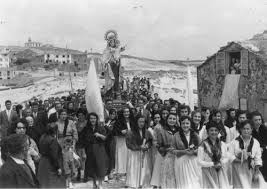
Women in traditional catholic dress in Francoist Spain

INTRODUCTION
The fall of Francisco Franco’s dictatorship in Spain marked a turning point or the nation’s political landscape as well as the rights and roles of women within Spanish society. From 1936 to 1975, Franco’s regime upheld rigid patriarchal norms that relegated women to subordinate roles, codified through oppressive legal structures and reinforced by the Catholic Church.i However, “the death of general franco in 1975, the gradual dismantling of the authoritarian system imposed on the country after the Civil War, together with the rapid rise to power of the Socialist Party, PSOR,” all exercised crucial influence on the way the feminist movement evolved.ii As such, by the 1980s, Spain emerged as a nation embracing gender equality in ways that resonated with the broader European civil rights movements.
This article argues that the end of guardianship in Spain represents a unique intersection of internal political transition and external European influences, as Spanish feminism is strongly argued to have been part of the “wider international women’s movement which has its own time and rhythm of development (…) in terms of its share in the history of twentieth century women’s liberation.”iii This will be illustrated through the exploration into the legacy of Francoist guardianship in Spain from the late 1950s, the role of European civil rights movements on Spain and finally, Spain post-1975 legislative and societal shifts towards traditional gender roles. Thus, depicting a transformative advance for women’s rights during the period of 1960 to 1980.
Women in Francoist spain
Under Franco’s dictatorship, the Spanish state institutionalised gender inequality through the system of guardianship. At the heart of this regime were patriarchal laws that deprived women of autonomy, most notably the ‘permiso marital’ which required married women to seek their husband’s consent for basic activities, including employment, property ownership, and travel. This legal dependency reduced women to a status akin to minors, consequently rendering their lives to be tightly controlled by their fathers or husbands.
This was further exacerbated as “the state took measures to prevent women’s labour outside the home” with professions deemed inappropriate for their ‘feminine’ nature.iiii Furthermore, the Catholic Church played a pivotal role in enforcing these gender roles, as women were “guided by Catholicism to follow the laws of the religion in the way that suited the Franco government.”v This is particularly evidence through education and state policy, as the Church promulgated the ideal of women as mothers and homemakers. Schools taught girls domestic skills, while Church rhetoric emphasised obedience and moral purity. Such teachings reinforced societal expectations that women’s primary duty was to their families, not to themselves as individuals. As a result, motherhood was seen “not only has the main family duty of women but also as women’s main obligation toward the state and society.”vi
Moreover, although resistance to this system existed, any form of opposition was fraught with danger. Feminist movements operated in secrecy, and were often marginalised or suppressed by the regime’s censorship and policing. Despite this, there is strong evidence depicting that “Spanish women formed grassroots groups to fight for the transformation of their neighbourhoods in the late 1950s and 1960s.”vii Women’s groups covertly organised discussions, distributed underground literature, and fostered a fledgling network of activism, notably led by María Dolores Calvet, consolidates this depiction of the Spanish grassroots groups by declaring “that significant numbers of women started organising on the outskirts of Madrid (…) from the late 1950s onwards.viii They did so in the context of Francoism, and neither democracy and secularism, nor high rates of literacy and formal education, 22 all were necessary preconditions.”ix However, despite these efforts, the pervasive surveillance and punitive measures can be seen to have limited their impact during Franco’s rule. This repressive environment delayed women’s emancipation, creating a legacy of inequality that Spain until two weeks after the death of Franco when the “women’s movement held its first national conference in Madrid.”x
The broader European civil rights wave of the 1960s and 1970s provided a critical impetus for Spain’s eventual reforms. Across Europe, women’s rights movements were gaining traction, achieving landmark victories that underscored the universality of their demands. In the United Kingdom and France, contraception became legalised, and in 1975, France decriminalised abortion. Furthermore, equal pay legislation emerged in countries such as Germany, which reflected the growing recognition of gender equity in the workplace. Arguably, Spain’s geographic proximity to these movements facilitated cultural exchanges that slowly eroded the isolation imposed by Franco’s regime and provoked the creation of “the ‘Institutio de la Mujer’ (Women’s Institute)” in 1983, in order to “persuade other state units to include gender equality in their policy agendas” and eliminate female subordination.xi
Additionally, transnational feminist networks increasingly fostered connections between Spanish activists and their European counterparts, enabling the sharing of strategies, ideas, and resources. International conferences, publications, and media coverage brought global feminist debates to Spain, inspiring local activists and expanding their vision for what women’s rights could entail. Furthermore, the integration of Spain into the European Economic Community (EEC) was another catalyst for change, as the EEC’s democratic ideals and emphasis on human rights set a standard that Spain, seeking to join the organisation, had to aspire to. As such, European institutions exerted pressure on Spain to align its laws with modern democratic principles, including gender equality. This external influence can be seen to have created an environment where reform was desirable as well as necessary for Spain’s economic and political aspirations.
Spain post-1975 shifts
The death of Franco in 1975 initiated a period of democratisation, offering unprecedented opportunities for systemic reform. The Spanish Constitution of 1978 emerged as a cornerstone of this transformation, explicitly guaranteeing gender equality. Spanish activists “fought for new divorce laws, abortion legislation and basic rights in the labour market”, subsequently leading to the creation of Article 14 which declared the equality of Spaniards before the law, prohibiting discrimination based on sex, whilst Article 32 recognised equality within marriage.xii
Additionally, legislative changes followed swiftly, dismantling the remnants of Francoist guardianship notably through the abolition of ‘permiso marital’ which, subsequently, granted married women the legal autonomy to work, travel, and manage property without their husband’s consent. In addition, divorce was legalised in 1981, reflecting a growing acceptance of individual freedoms within personal relationships, whilst efforts to combat domestic violence also began to take shape, though these early measures lacked the comprehensive frameworks seen in later years.
Simultaneously, societal attitudes began to shift in tandem with these legal reforms. Increased access to education for women played a pivotal role, enabling them to pursue careers and participate more fully in public life. By the 1980s, female enrolment in universities had risen significantly, creating a new generation of educated women who could challenge traditional gender norms, as the early phase of democratisation witnessed “significant changes in the academic context, first, we experienced a notorious increase in the number of students, a 103 percent rise for females (…) during the period 1975-88.”xiii Women’s participation in the workforce also increased as economic necessity and changing cultural values encouraged families to embrace dual-income households.
Finally, the “1978 constitution explicitly states that women and men are equal before the law, and sex discrimination is prohibited”, marking an official turning point in the Spanish feminist movement.xiv
conclusion
Ultimately, the persistence of traditionalist attitudes in many sectors of society, as well as the structural barriers women faced in achieving full equality, the fall of Franco’s dictatorship can be seen to have provided a critical opening and platform for reform. At the same time, European feminist movements and institutions offered models and pressures that accelerated Spain’s progress. Through legislative changes and shifting societal attitudes, Spain began to dismantle the patriarchal structures that had long defined women’s roles.
Coupled with this, “internal migration, catholic internationalism and industrial unrest” is seen to have exacerbated the development and growth of women’s movements in post-Franco Spain.xv Ultimately, the end of guardianship in post-Franco Spain can be argued to have exemplified the interplay between internal political shifts and external influences from the broader European civil rights wave, establishing a platform for the Spanish feminist movement.



Leave a Reply