
Member’s Insights Night – January 2025
Presentation by Vali Jamal
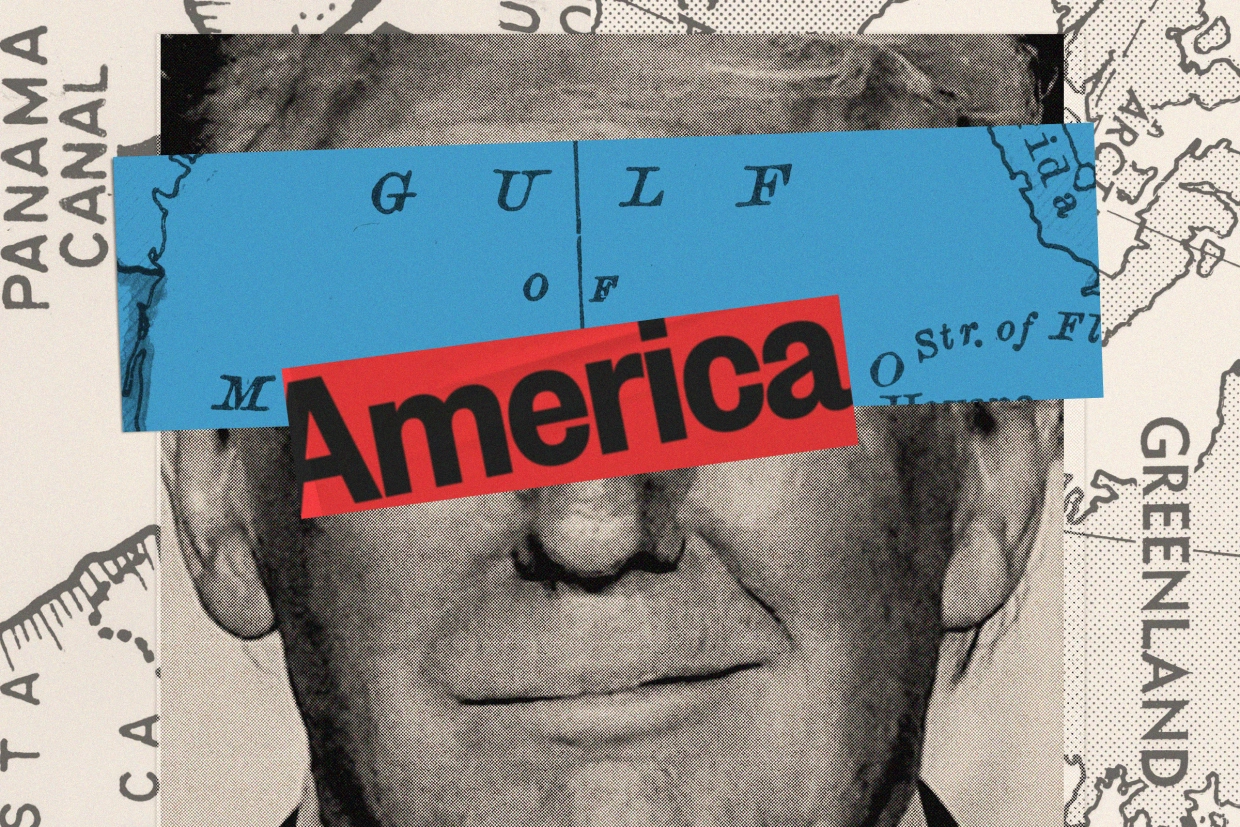
Though the year has only just started, there have been plenty of international events to talk about. Newly elected President Trump has already threatened to invade both of its neighbours, Canada and Mexico, while also strongly expressing his wish to buy Greenland. Moreover, in his grand scheme to ‘Make America Great Again’, Trump has announced that he will impose harsh tariffs on major trading partners like China and the European Union. Domestically produced goods will be favoured over those manufactured on foreign soil, even though financial experts say this might also lead to general price increases.
These policies and statements are in line with America’s newfound isolationism. It breaks with almost 80 years of promoting freedom and democracy whilst protesting human rights around the world. Many observers around the world fear the damage this upcoming administration will do to the Trans-Atlantic alliance, one of the central international organisations on the world stage.
But why have Americans voted for a man who wants to isolate the U.S. from the world stage? During the first History at Present (GA) meeting, Research Fellow Vali Jamal explained the two main causes:
- Americans are becoming more isolationist due to repeated failures in foreign intervention which has led to a breakdown in confidence in America’s capabilities in “fixing the world’s problems.”
- Americans live in a deeply unequal society, facing a host of domestic issues that are seen as more important to most Americans than any notion of supporting our alliances abroad.
History of American Isolationism
The U.S. has adopted an isolationist approach even prior to the Spanish-American War. More famously, George Washington, the first American President, declared neutrality in 1792 when the War of the First Coalition broke out. He addressed his policy of non-interventionism in his farewell:
“The great rule of conduct for us, in regard to foreign nations, is in extending our commercial relations, to have with them as little political connection as possible. Europe has a set of primary interests, which to us have none, or a very remote relation. Hence she must be engaged in frequent controversies the causes of which are essentially foreign to our concerns. Hence, therefore, it must be unwise in us to implicate ourselves, by artificial ties, in the ordinary vicissitudes of her politics, or the ordinary combinations and collisions of her friendships or enmities.”
Succeeding presidents build further on this notion, but it is difficult to describe their foreign policy as pure isolationist. Isolationism in the American context meant that the U.S would not get involved in the conflicts of Asia or Europe, across the sea. But the U.S. still fought wars across the American continent, fighting wars with the Natives and Mexico, expanding its own territory throughout the continent. Former President James Monroe encapsulated this idea in his Monroe Doctrine
“In the wars of the European powers, in matters relating to themselves, we have never taken part, nor does it comport with our policy, so to do. It is only when our rights are invaded, or seriously menaced that we resent injuries, or make preparations for our defense.”
At the end of the 19th century, America’s isolationism came to an end with the emergence of the U.S. as a global power. A progressive era emerged with people like Theodore Roosevelt and Woodrow Wilson who wanted to expand America’s presence in the world. Though the U.S. briefly returned to ‘normalcy’ during the 20’s and 30’s, it still played a decisive role in the major conflicts of the century: World War I & II. America cemented itself as the global power alongside the Soviet Union, which it eventually surpassed to become the hegemonic power between the 1990s and 2000s.
But during this mostly uncontested period is when the U.S. would undergo severe failures under the watchful eye of the rest of the world. Notable events include but are not limited to
- Invasion of Afghanistan: Ousted the Taliban, however Taliban reorganized, war dragged on for 20 years, and the Taliban retook the country as soon as the US withdrew.
- Invasion of Iraq: Ousted Saddam, war becomes an insurgency, new government is weak, Iraq becomes a hotspot for Islamist militants, the Islamic State, and pro-Iranian Shi’ite militias.
- Involvement in Libya: Ousted Gaddafi, had no plan afterwards, country fell into civil war and became a hotspot for militants like the Islamic State
- Involvement in Syria: Failed to oust Assad, most of the rebels were crushed (until a resurgence in 2024), and the Islamic State rose to power and briefly held significant territory. Also Obama’s red line was crossed multiple times and nothing happened, weakening American leverage.
- Involvement in Ukraine: Got a pro-US government but lost Crimea and has been unable to retake several territories in the Donbass since the 2022 full-scale invasion.
Today’s situation
During the 2024 election, the American populace was split over two major foreign conflicts. First, Republicans haven taken up a more anti-Ukraine stance as fewer and fewer Republicans have any interest in supporting Ukraine. This is illustrated by Vivek Ramaswamy, an American billionaire who now runs the Department of Government Efficiency with Elon Musk, who has attacked President Zelensky multiple times, even calling him a nazi during debates. This also shows the power of framing and social media as sways of the American populace now have a strongly negative image of Zelensky, ignoring the fact that the Ukrainian President is Jewish.

Moreover, the Israel-Palestine conflict has sparked huge debate. The Democrats have been unwilling to take a harsher stance against Israel, alienating a significant part of their voting base. Youths, Muslim, and Progressive Americans were angered about the double standard toward human rights violations in Israel-Palestine compared to Ukraine. Meanwhile, Trump has completely taken the side of Israel, encouraging his friend Netanyahu ‘to finish the job’.
On a domestic level, we see a country that is deeply unequal. The U.S. has done much better economically on a macro level than previous years. However, the common people have not benefited from this:
- Healthcare costs have risen immensely as an increasing number of Americans rack up a significant amount of medical debt
- 43 million (13% of U.S. populace) have outstanding federal student loan debt
- Grocery store prices have soared which has contributed to many people not being able to pay all their bills

Conclusion
Americans live in the richest most powerful nation in the world, yet they have witnessed geopolitical intervention fail time and time again. Quick victories turned into long insurgencies, revolving into chaos, instability and eventually an embarrassing retreat. Despite America’s great wealth on a national level, the U.S. is fundamentally more unequal with higher rates of deprivation, debt, worse infrastructure, and more economic anxiety.
This has fuelled a cynical population which has been more prone to nationalistic and isolationist ideas. Americans are sceptical of their tax dollars supporting foreign interventions like Ukraine when they are struggling themselves: they feel forgotten by the state.
Trump has masterfully played into these grievances, resulting in a rather comfortable victory. With the support of both Houses, the Senate and Supreme Court, Trump is all set to push his anti-establishment agenda. One could say he reinvented the Monroe Doctrine, pushing aside NATO and China to focus on the North American continent. In this context, his seemingly unrealistic aspirations to annex Canada and Mexico start to become less and less unthinkable.




Leave a Reply